Design Diaries: When It’s Personal
The Swan Point Project: A Lake House Renovation in New Hampshire
Some projects are about square footage and finish selections. This one was about a whole lot more than that.
Swan Point is the New Hampshire lake house belonging to one of my closest friends—someone I have known since third grade. She believed in this business before it had a name, and she and her husband were two of the loudest voices encouraging me to take the leap and start it. When they asked me to renovate their home, it was a full-circle moment I won't forget.
That kind of trust changes the way you show up for a project. I wanted to get it right, not just professionally, but personally.
The Scope: Improving How They Actually Live
This renovation wasn't about starting over. It was about making a home that already had good bones work better, feel better, and look like the people who live in it.
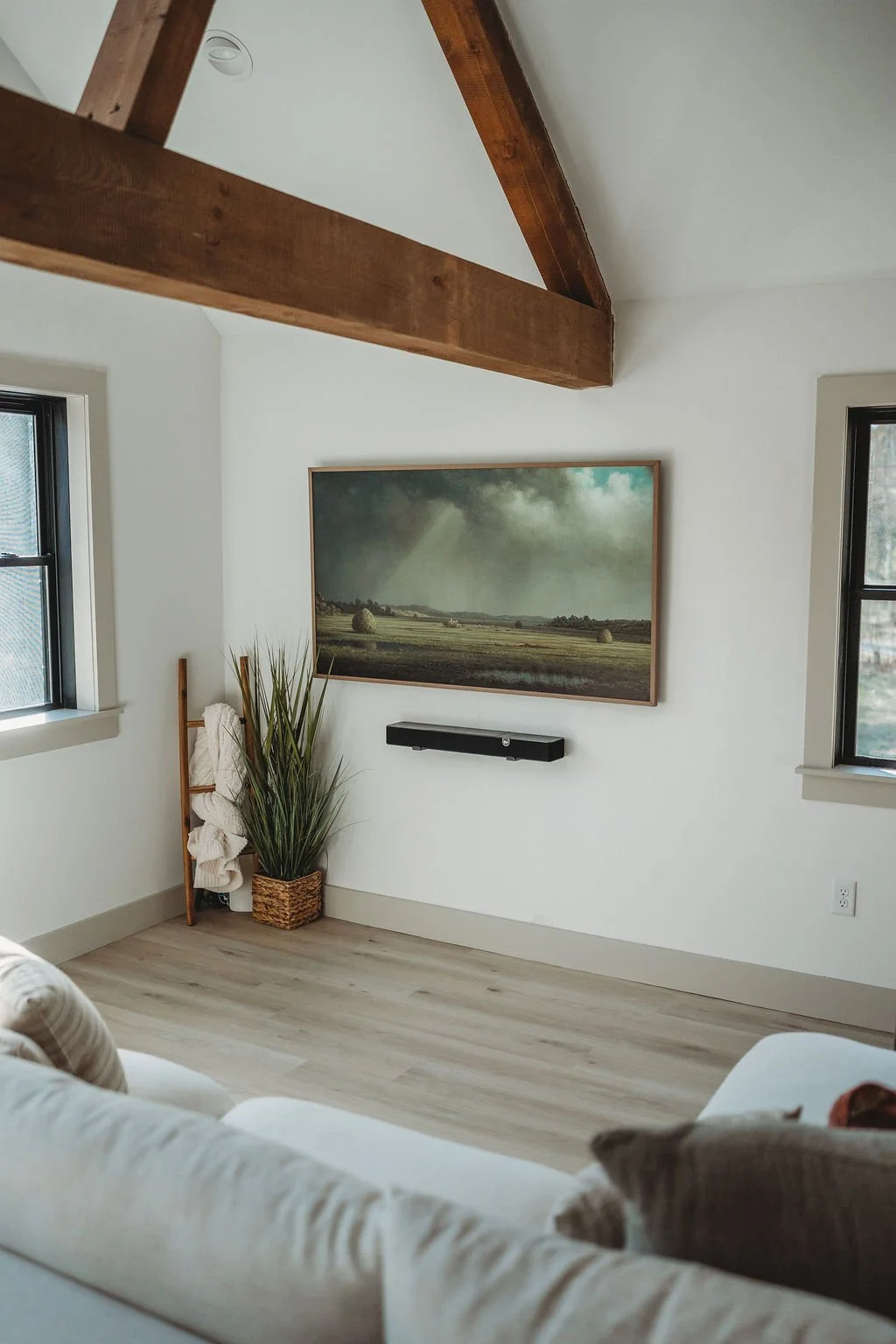
The goals were clear from the start: improve the livability of the space, increase the square footage where possible, and do all of it without sacrificing style. They love to host but had no use for a formal dining room. They love green. They wanted the warmth of the existing wood tones preserved, not erased. And they trusted me—remotely, from across the country—to make the right calls.
I flew out to take measurements, collaborated virtually throughout the entire process, and worked with their local trades to execute the vision. Remote projects come with their own set of challenges, and this one was no exception. Things came up, we had to pivot, and problems were solved from a distance. That's the reality of virtual design done well. The key is having a client who trusts the process, and these two did completely.
As they put it:
"From the very beginning and throughout the entire process, she kept us confident. She took the time to walk us through every step in detail, explaining options clearly and helping us make informed decisions that perfectly aligned with our vision and budget."
That's the standard we hold every project to, whether we're down the street or across the country.
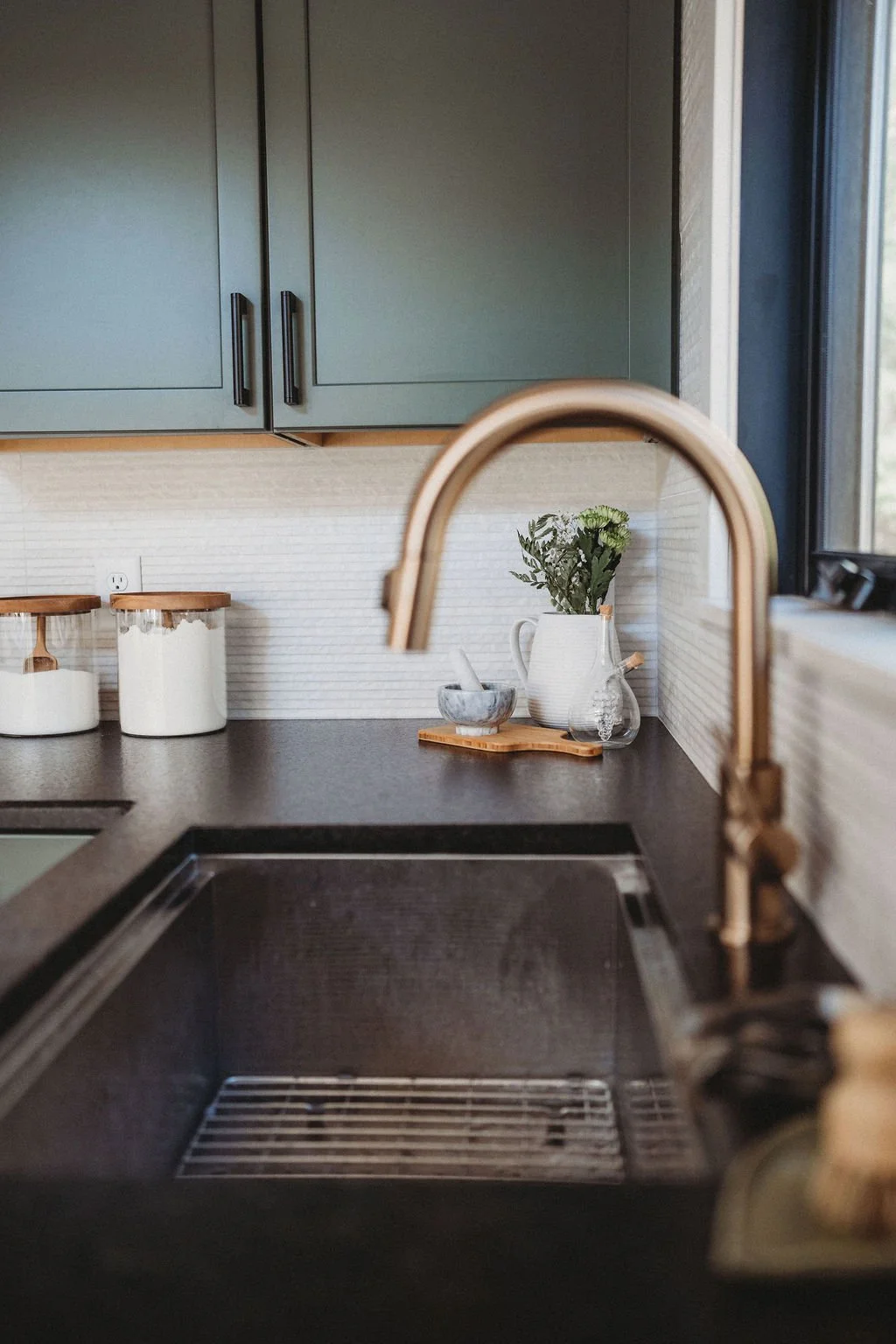
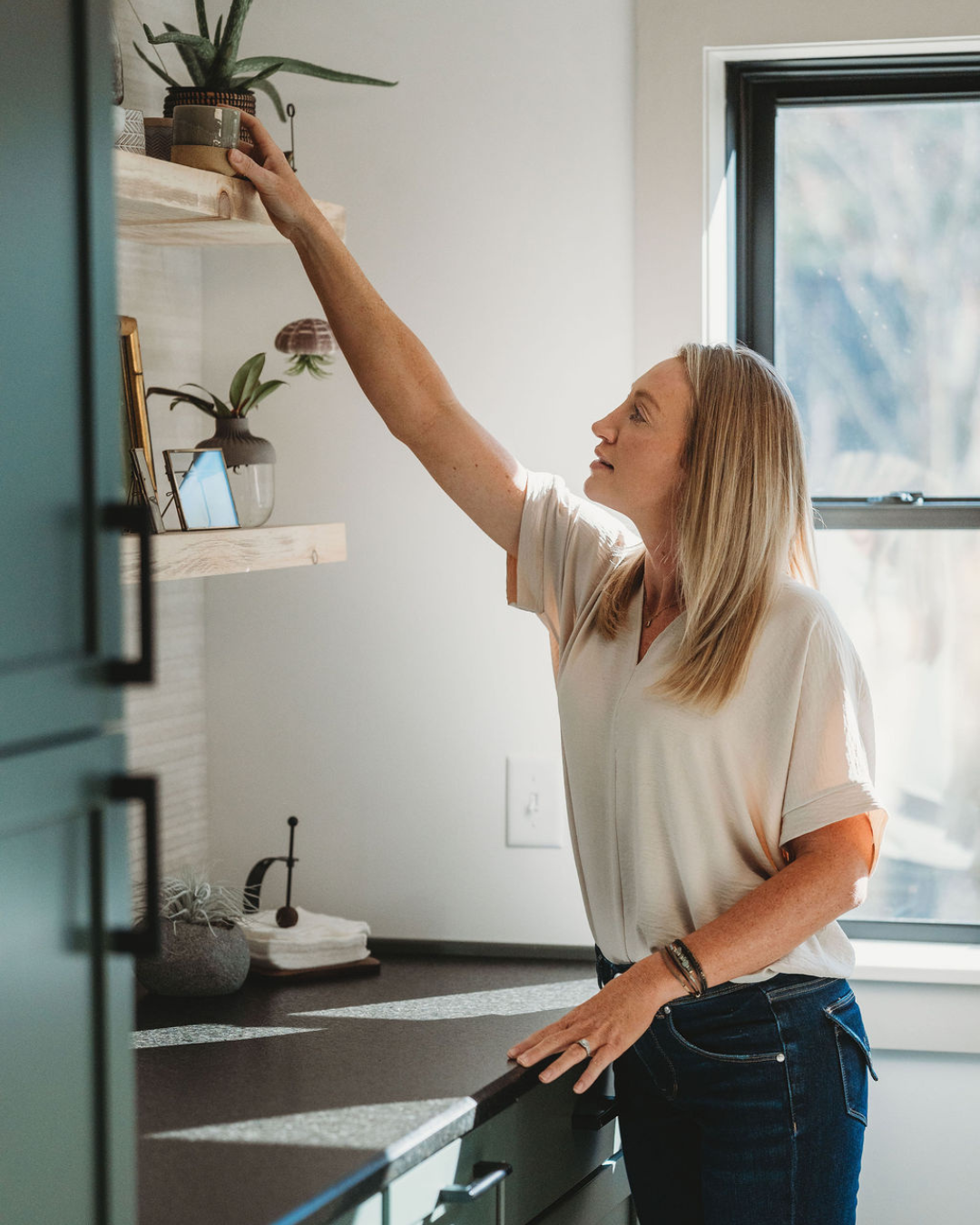
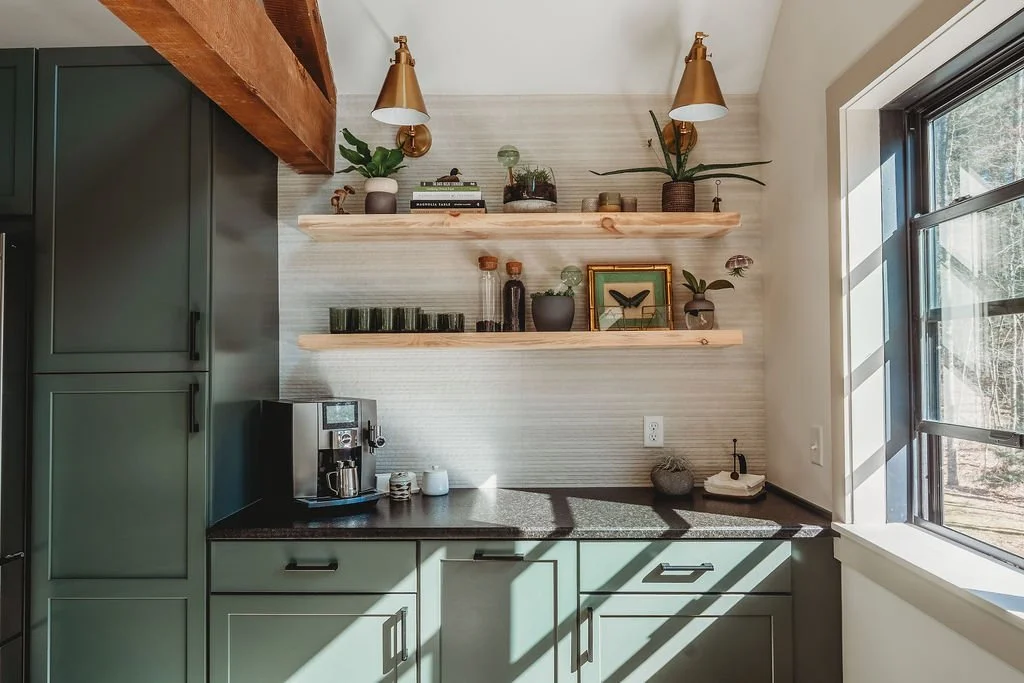
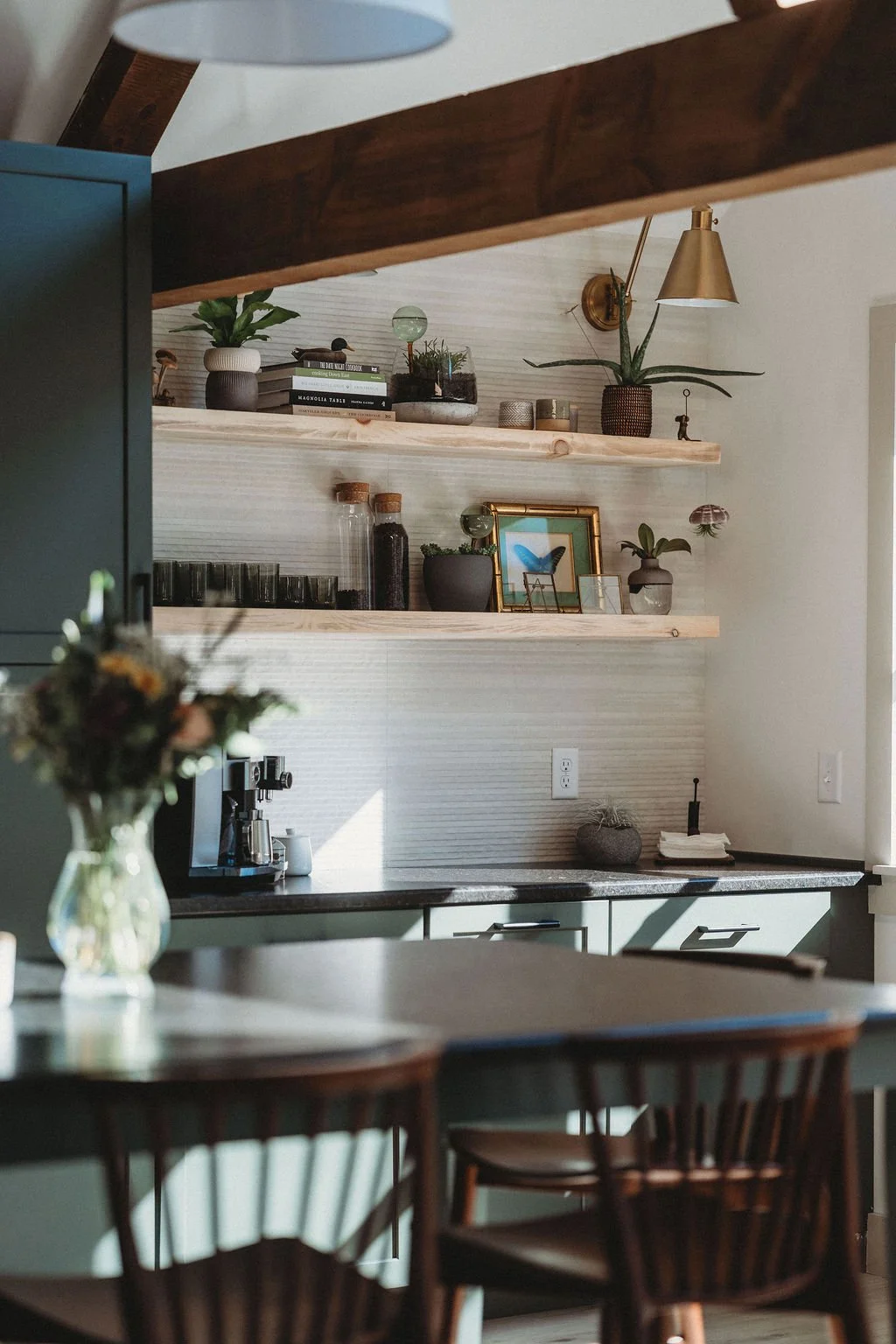
The continuity created by this textured wall tile is magic. You would never know the coffee bar used to be the front porch.
The Kitchen: The Heart of the Transformation
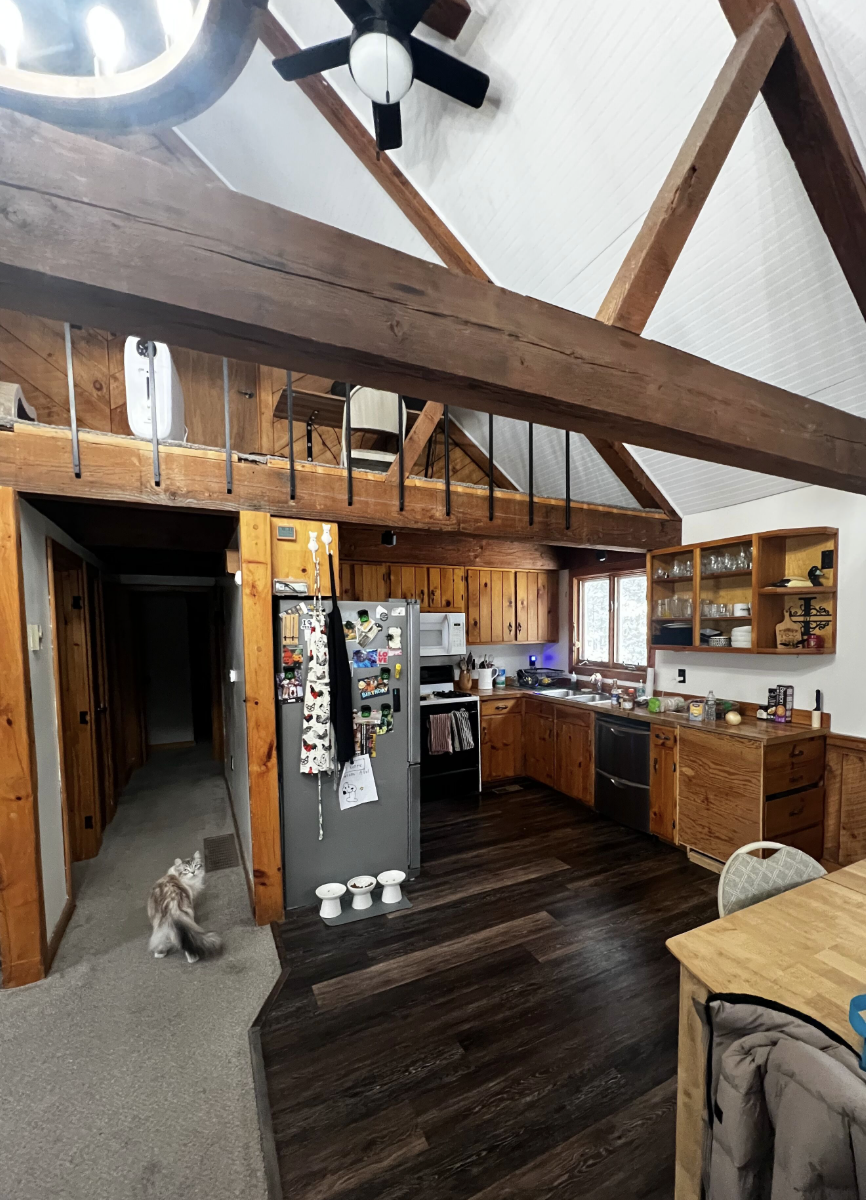
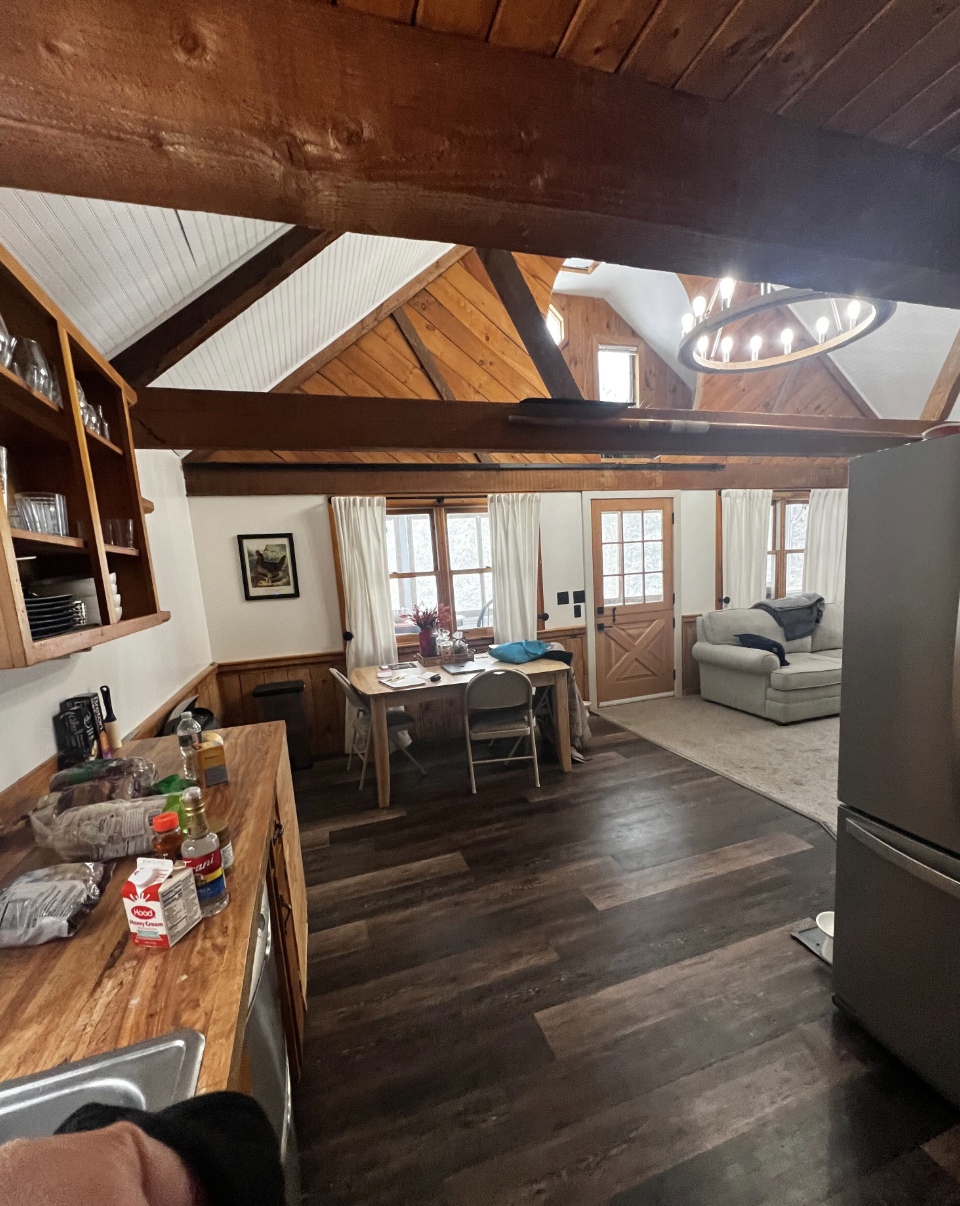
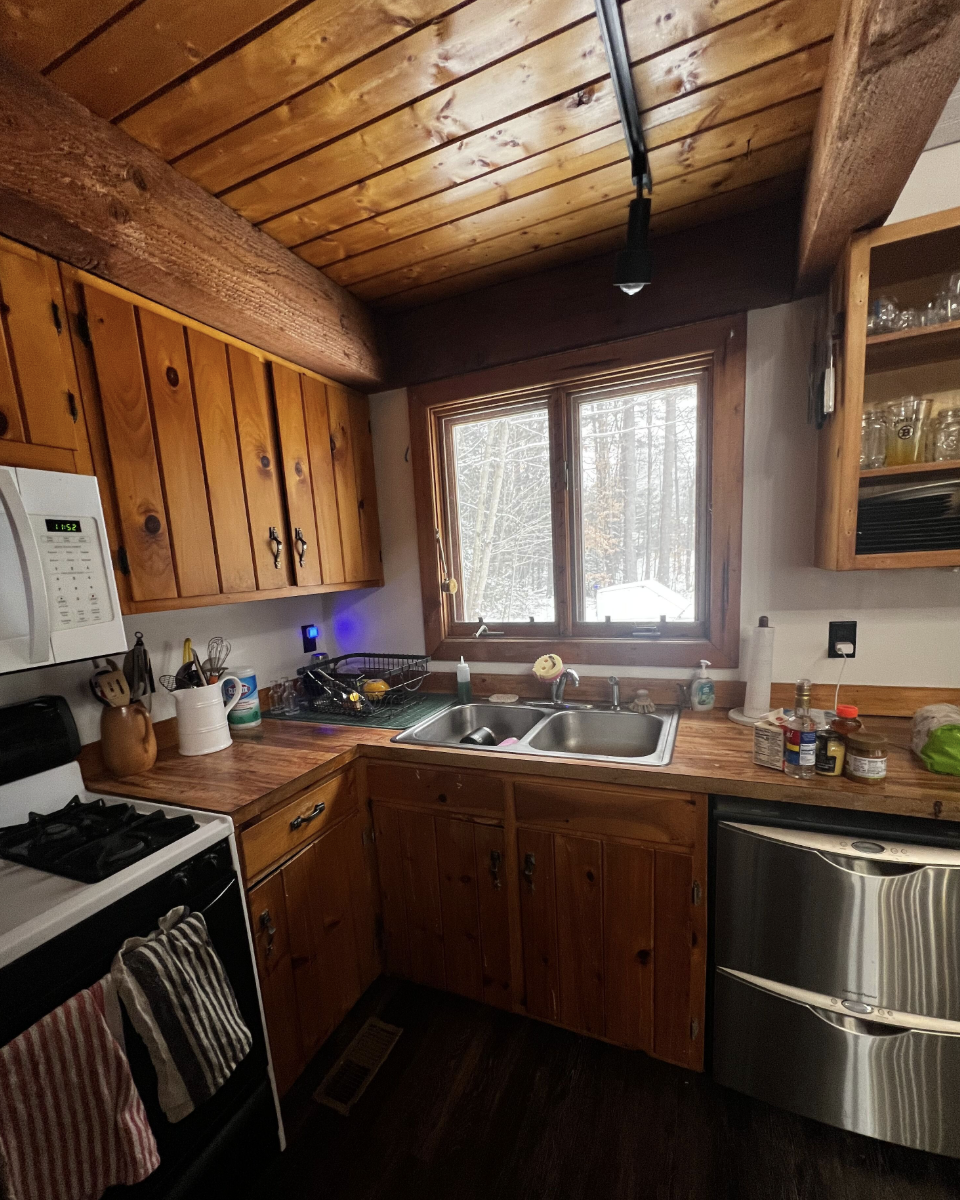
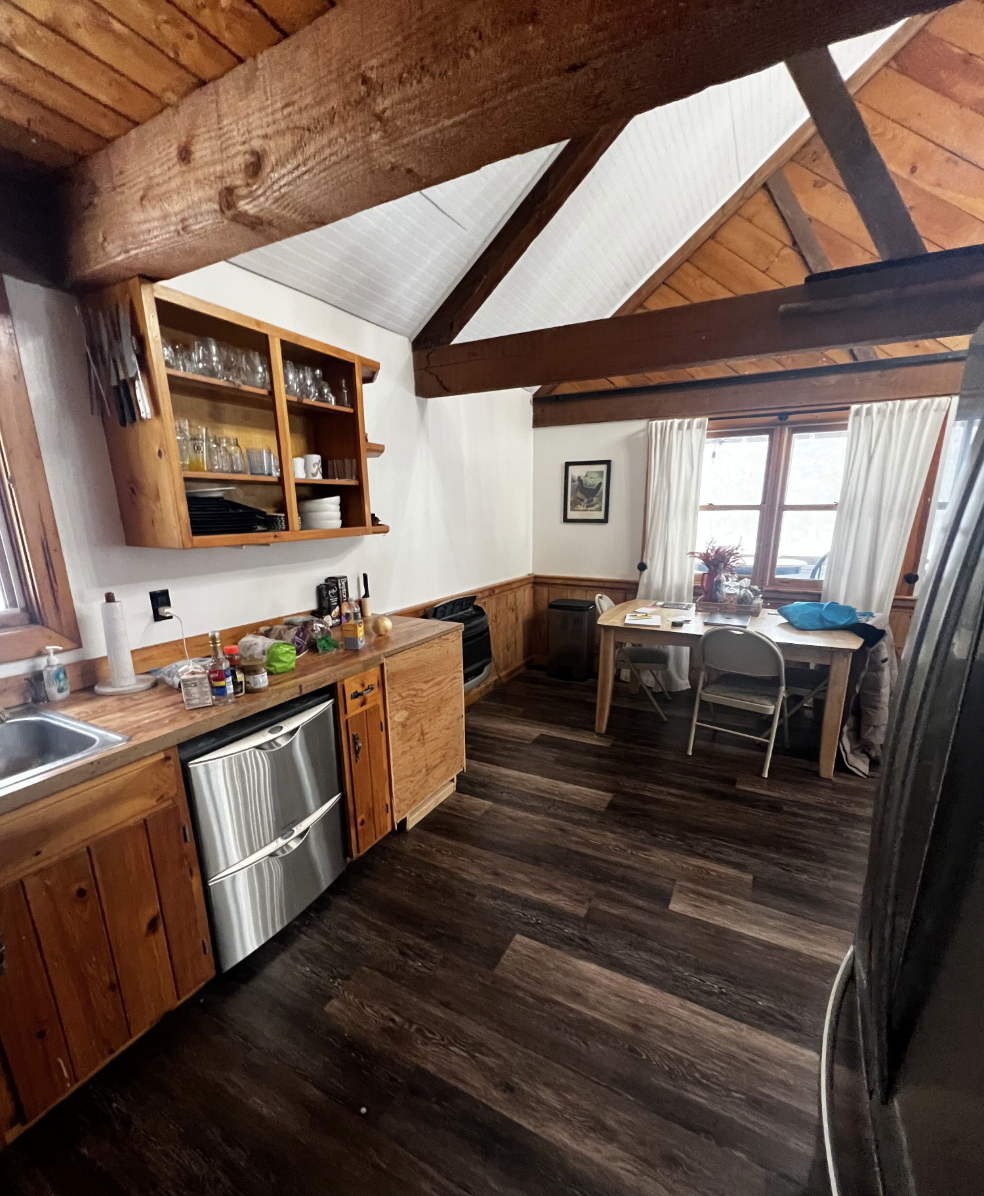
The before photos tell the story better than words can. The kitchen felt cramped, closed off, and dim—a cave of a space that didn't reflect the warmth and life of the people living in it. The after is almost unrecognizable.
Expanding the Footprint
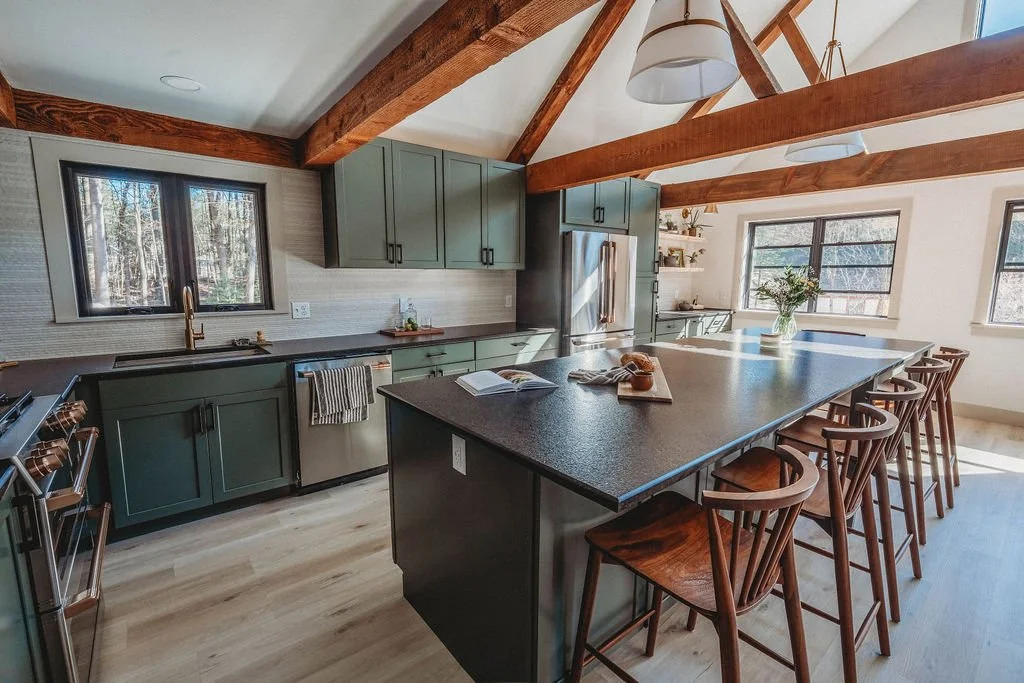
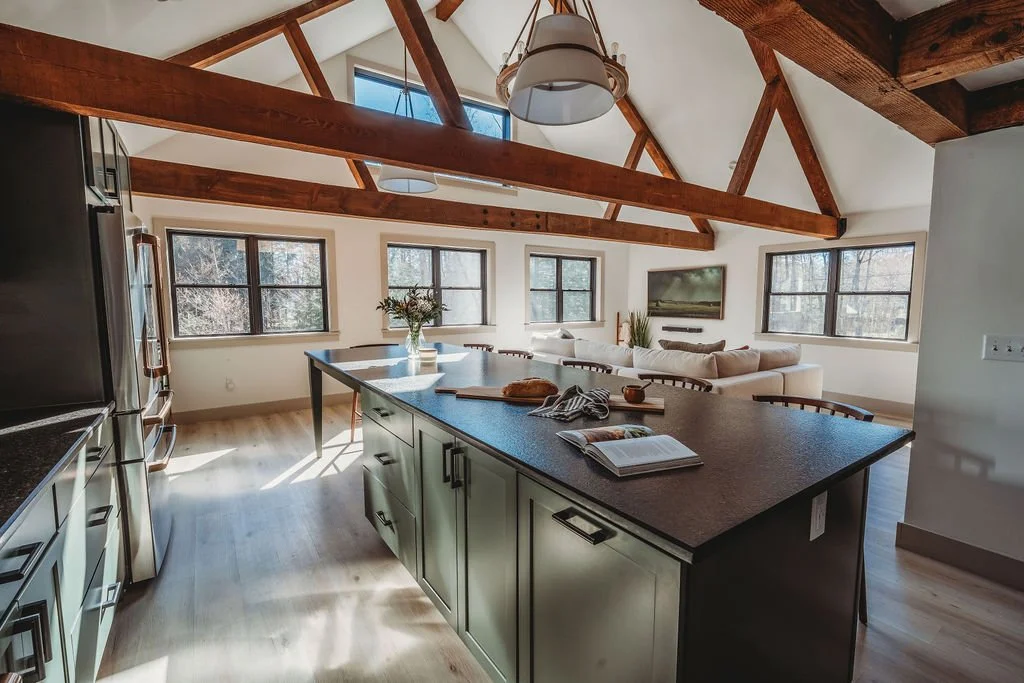
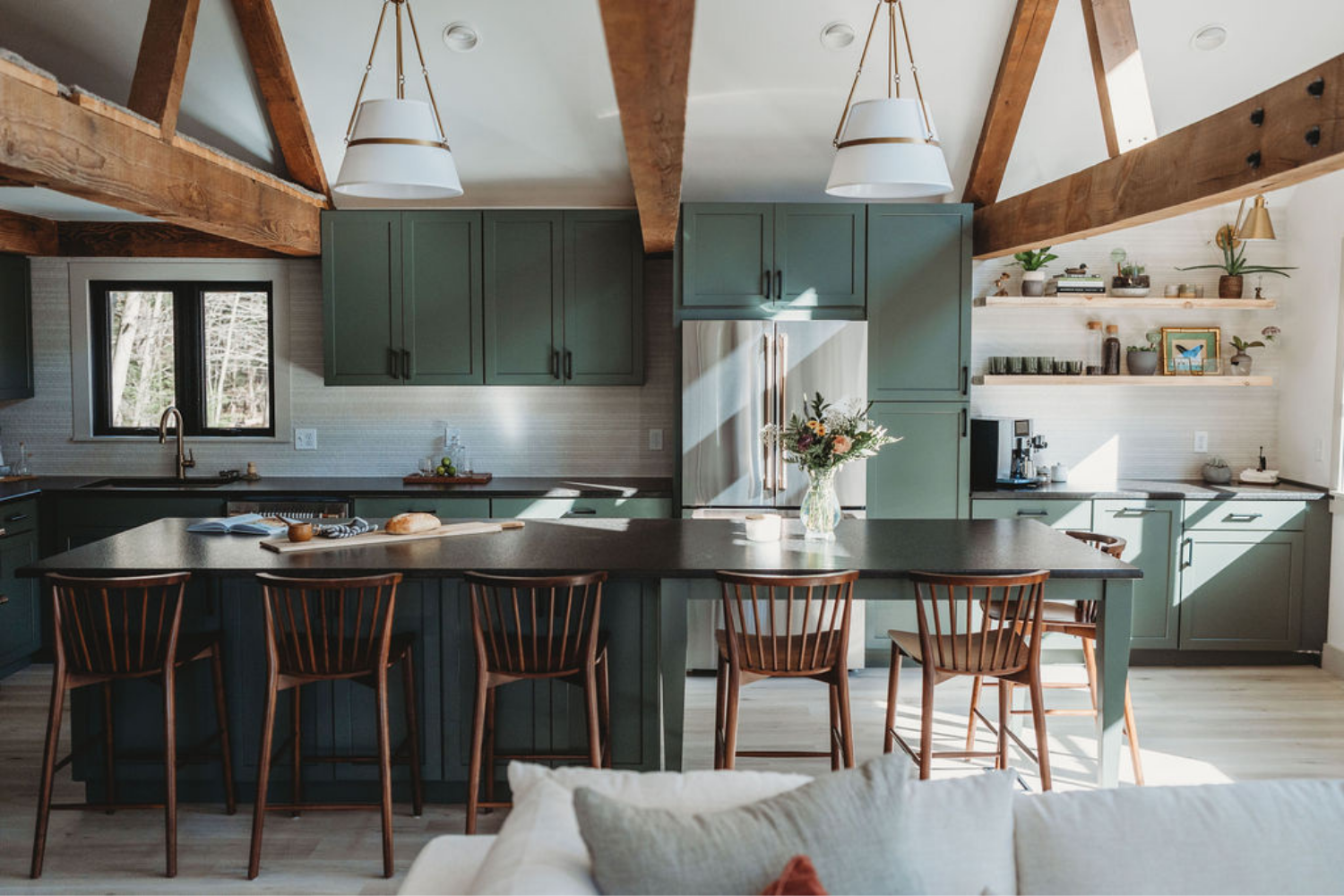
One of the smartest moves we made was taking in the porch and adding it to the interior square footage. It sounds simple, but the impact was significant. That reclaimed space became the coffee bar, and it's one of the most talked-about moments in the entire renovation. The kitchen and main living area now feel open, connected, and entirely transformed, not by gutting everything, but by thinking creatively about what was already there.
This is exactly the kind of creative problem-solving the clients referenced in their review:
"During the designing phase, when we thought we were limited in space, she was quick to step in with impressive solutions. One in particular not only solved a problem but actually improved upon our original plan." The porch-turned-coffee-bar was that solution.
The Island
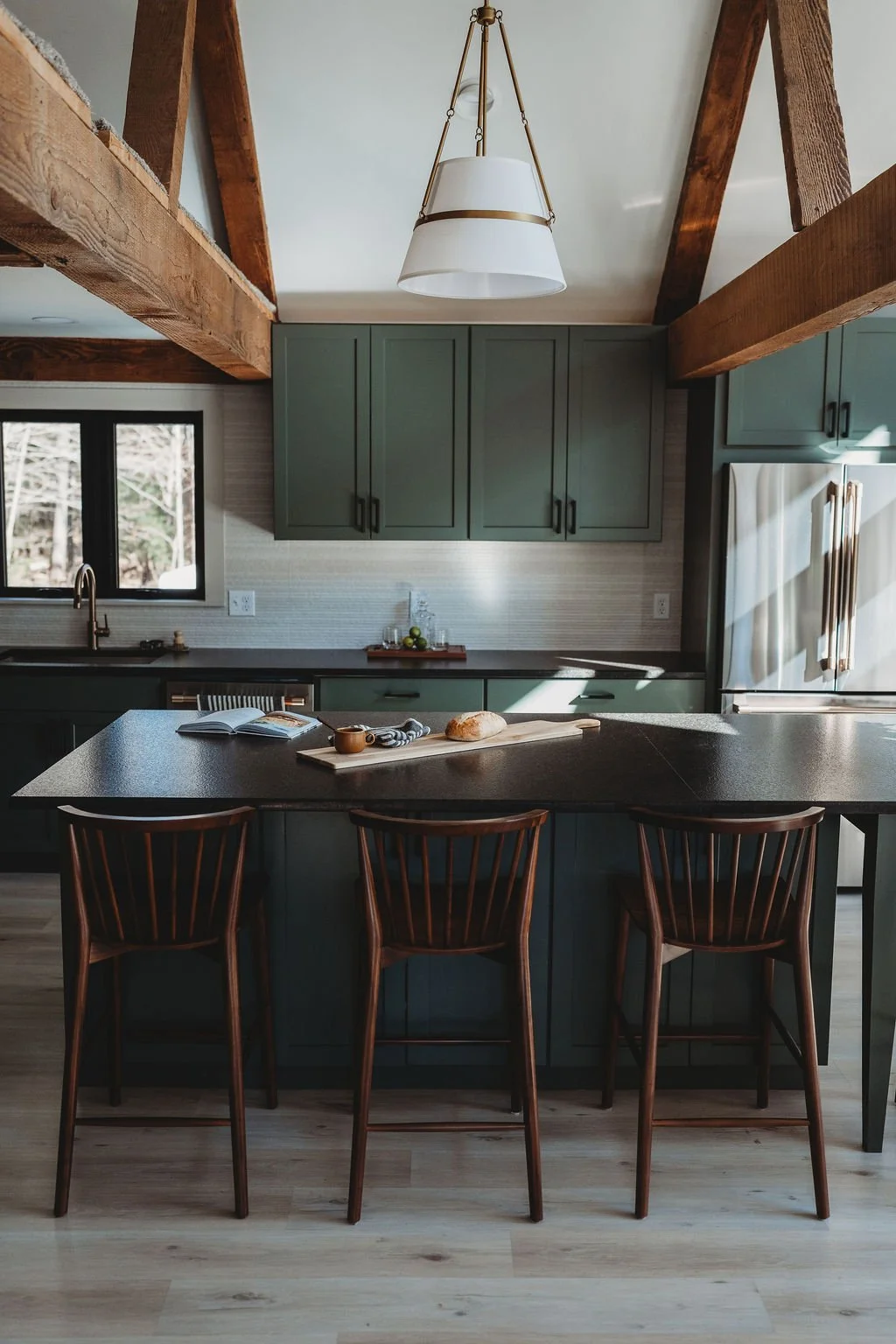
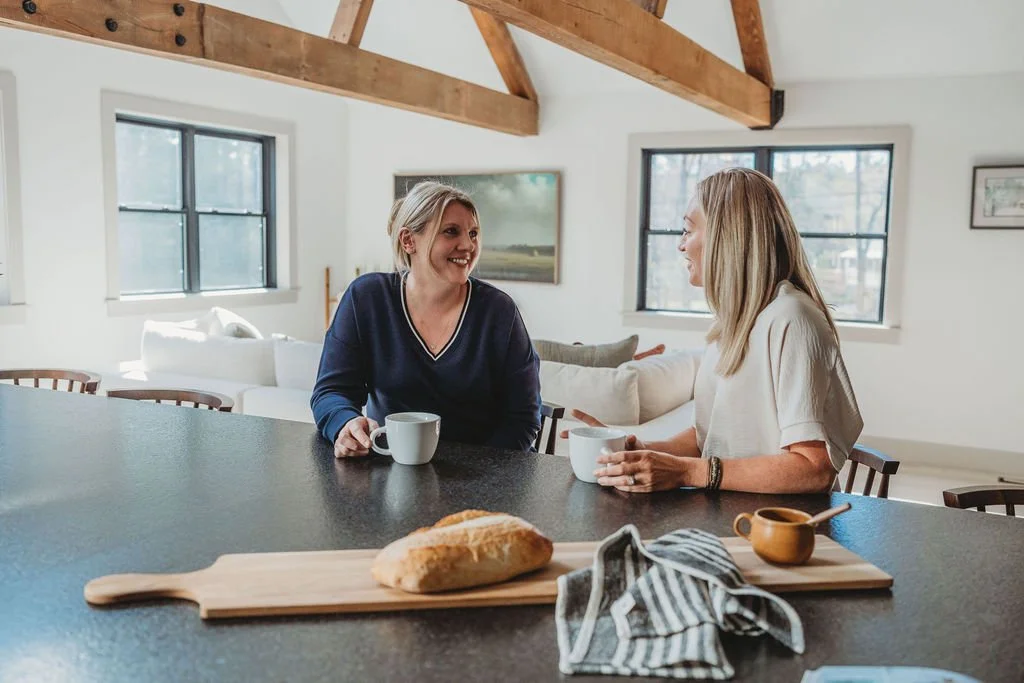
They didn't need a formal dining room; they needed a place to gather. So we designed a 14-foot dine-in island that seats up to eight people comfortably. It's the kind of decision that only makes sense when you actually listen to how a family lives. The island does what a dining room never could: it keeps the cook in the conversation, makes hosting feel effortless, and anchors the open layout with presence and purpose.
Cabinetry and Color
They love green, so instead of hedging with an accent island or a single painted wall, we committed. Green cabinets throughout, balanced by a lighter Scandinavian floor tone that keeps the rich wood details in the space from feeling heavy. It's a bold choice that works because it was made with intention. The trim color is a subtle neutral contrast — enough to define the space and give the green something to sit against, without competing with it.
The Details That Make It
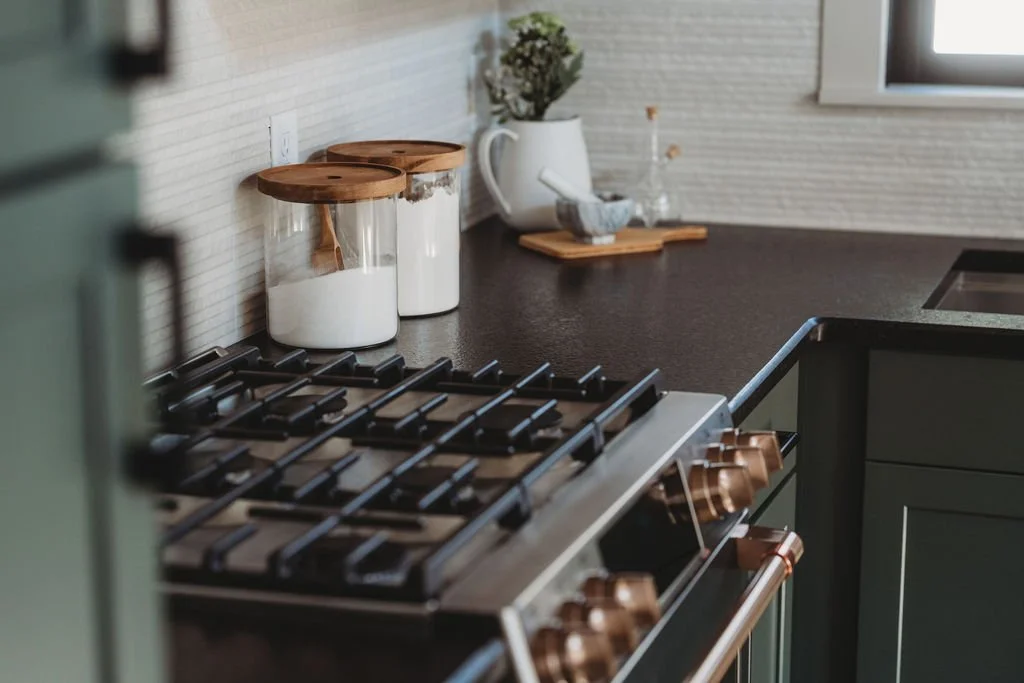
The backsplash behind the coffee bar stops people in their tracks. It's a large-format ribbed tile with a matte finish—textured, tactile, and unlike anything you typically see in a kitchen renovation. The same tile continues through the kitchen to create continuity, keeping the space from feeling like a series of individual decisions rather than one cohesive design.
The countertops are black pearl leathered granite, and yes, granite is very much alive. When it's the right application, the right finish, and the right space, it looks exactly like this. The leathered finish adds depth and texture without the high-sheen drama of polished stone. It's grounded and refined, and it suits the character of the home perfectly.
For hardware, we balanced matte black with touches of bronze throughout. A small detail that adds subtle elegance and keeps the palette from feeling flat.
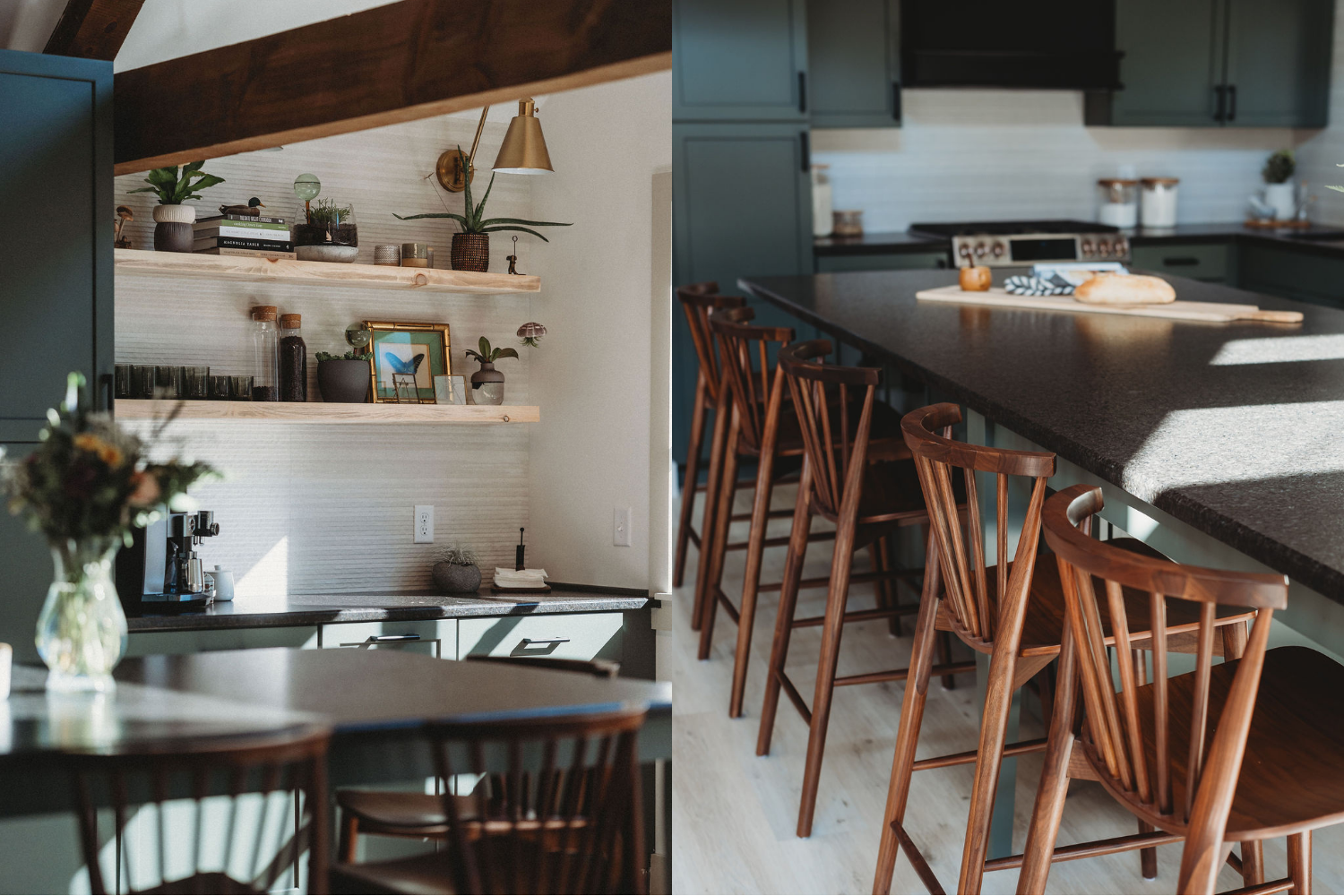
Yes, granite is very much alive, and these are black pearl leathered granite. With the right application, granite can look this good.
On Budget, On Vision, On Schedule
One of the things I'm most proud of with Swan Point is how it came together. Major renovations are hard, and keeping budgetary discipline on a complex, remote project is harder still. Anticipating issues before they become expensive surprises, presenting options clearly, and helping clients make informed decisions is the work that happens behind the scenes on every project, and it matters just as much as the finish selections.
The clients said it better than I could:
"She anticipated and explained potential issues before they materialized, which saved both time and money while keeping the project on schedule. What might have become an overwhelming ordeal was instead transformed into a smooth and stunning renovation."
That's the goal every single time.
What This Project Really Came Down To
Swan Point wasn't about chasing a look. It was about improving a home so that the people living in it could enjoy it more fully. More space. Better flow. A kitchen worth spending time in. And a design that feels like them: warm, layered, and completely at ease on the water.
No boat knots. No oars on the wall. Just a lake house that holds its own on design while still feeling like exactly the right place to exhale.
I'm really proud of this one. And I think she is too.
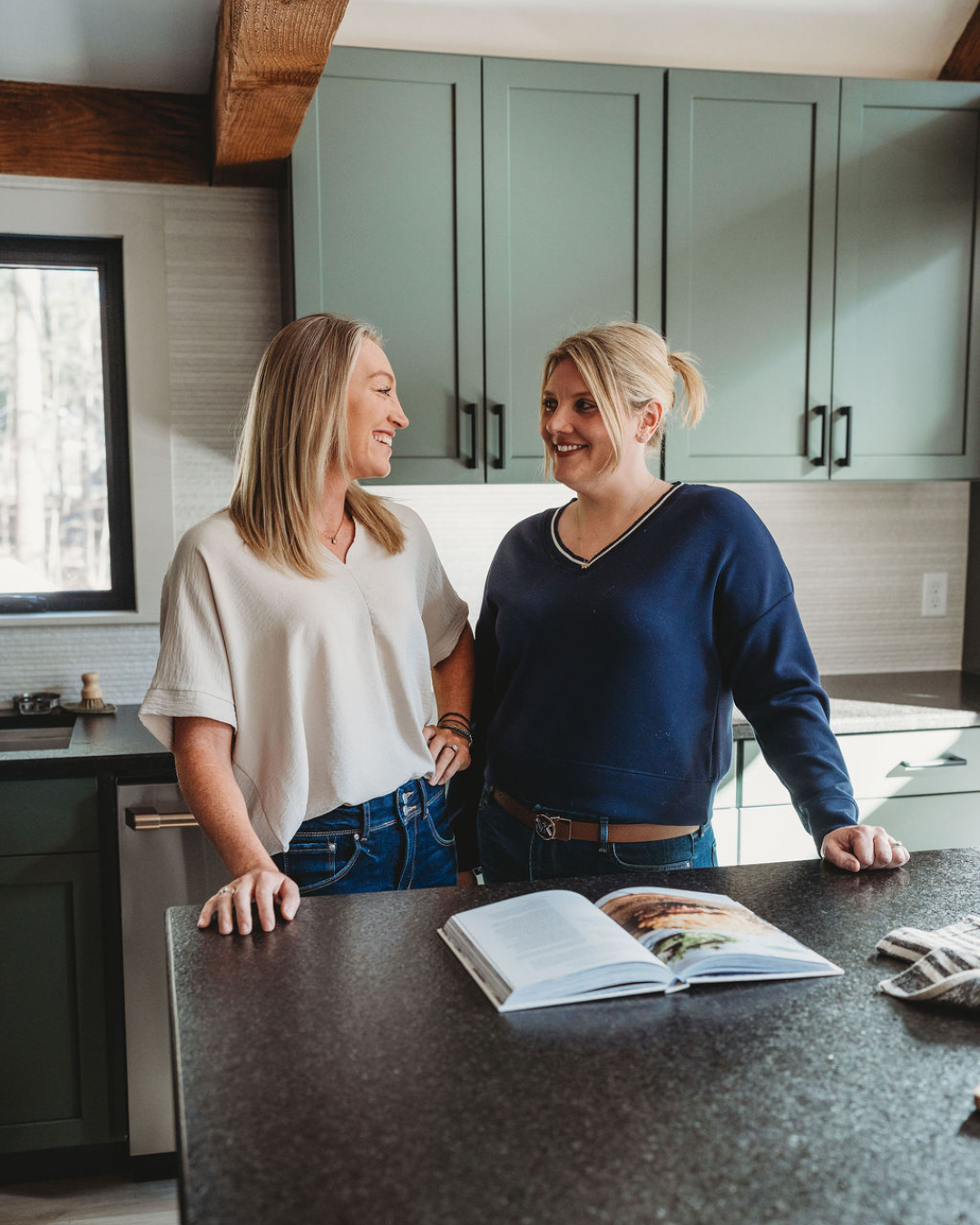
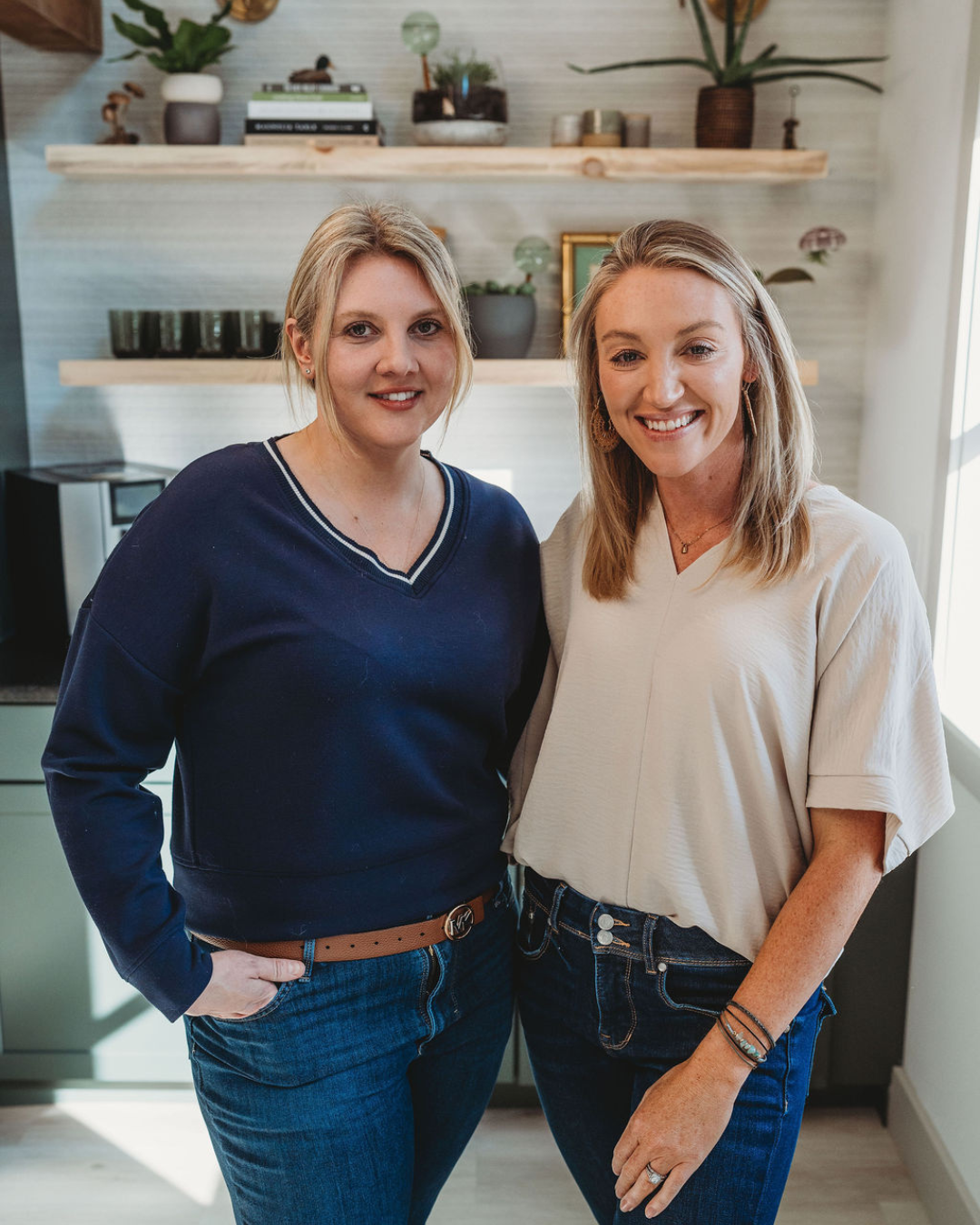
Designer: Erica Lee, Owner of Studio Lee
Builder: ASC Contracting
Photography: Billodeau Video
Ready to design a home that feels just right?
Schedule your design consultation and get expert guidance on your specific project.