The Bathroom Details That Actually Make a Difference: A Studio Lee Design Guide
Four Secrets to Turning the Smallest Room into the Biggest Flex
The bathroom is one of the most underestimated spaces in a home. Let me explain why.
While bathrooms are typically the smallest rooms, they often make the biggest impact. In fact, the smaller the room, the more every decision matters.
Patterned tile? Can read busy or intriguing. Paint an accent wall or wallpaper it up? Could make a statement… or send the wrong message.
Good bathroom design is a tricky balance. Let’s break it down and dive into the details of a well-designed bathroom.
The Art of Tile Lay Patterns
If you’ve ever stood in the tile aisle stuck deciding between two samples, I’ve got good news for you. Choosing the right tile is key, but it’s not always the dealbreaker decision.
Sometimes the tile you choose is less important than the way it’s laid. I’ve seen it countless times: the same tile in two different lay patterns reads as two completely different designs. So what’s the trick?
At Studio Lee, we consider how common lay patterns work for achieving certain looks:
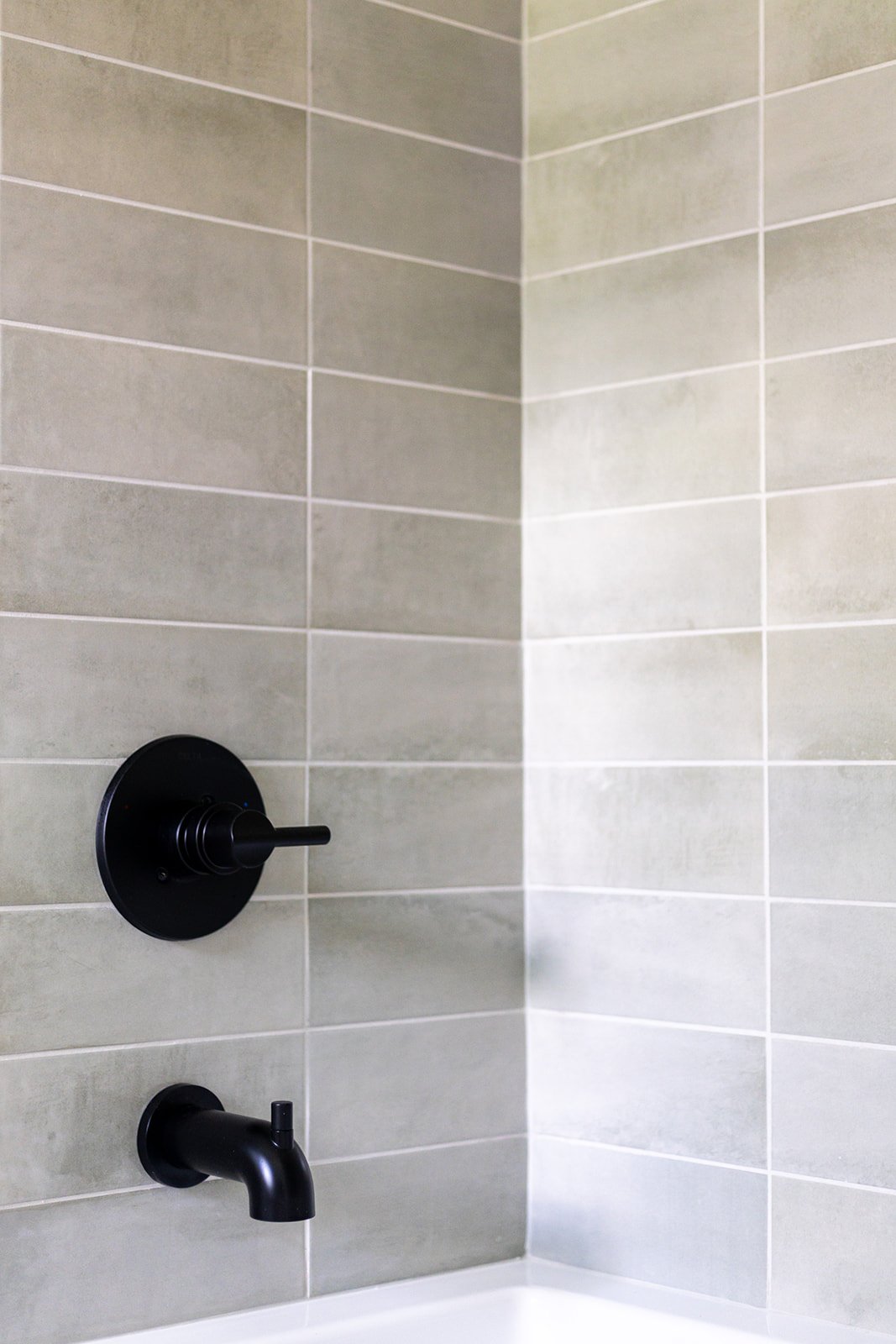
Straight stack: clean, modern, architectural styles
Offset/brick: classic, approachable, works in most styles
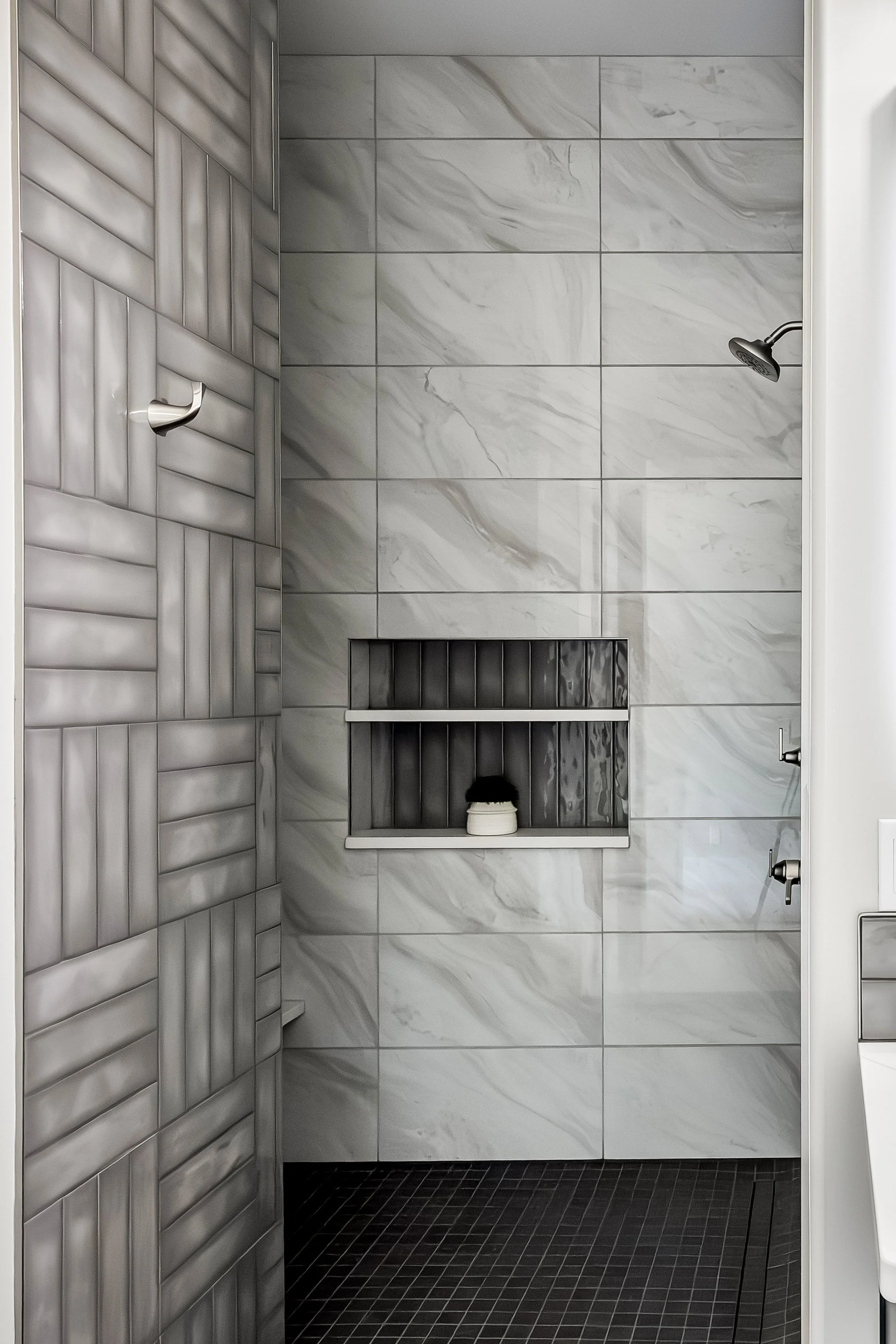
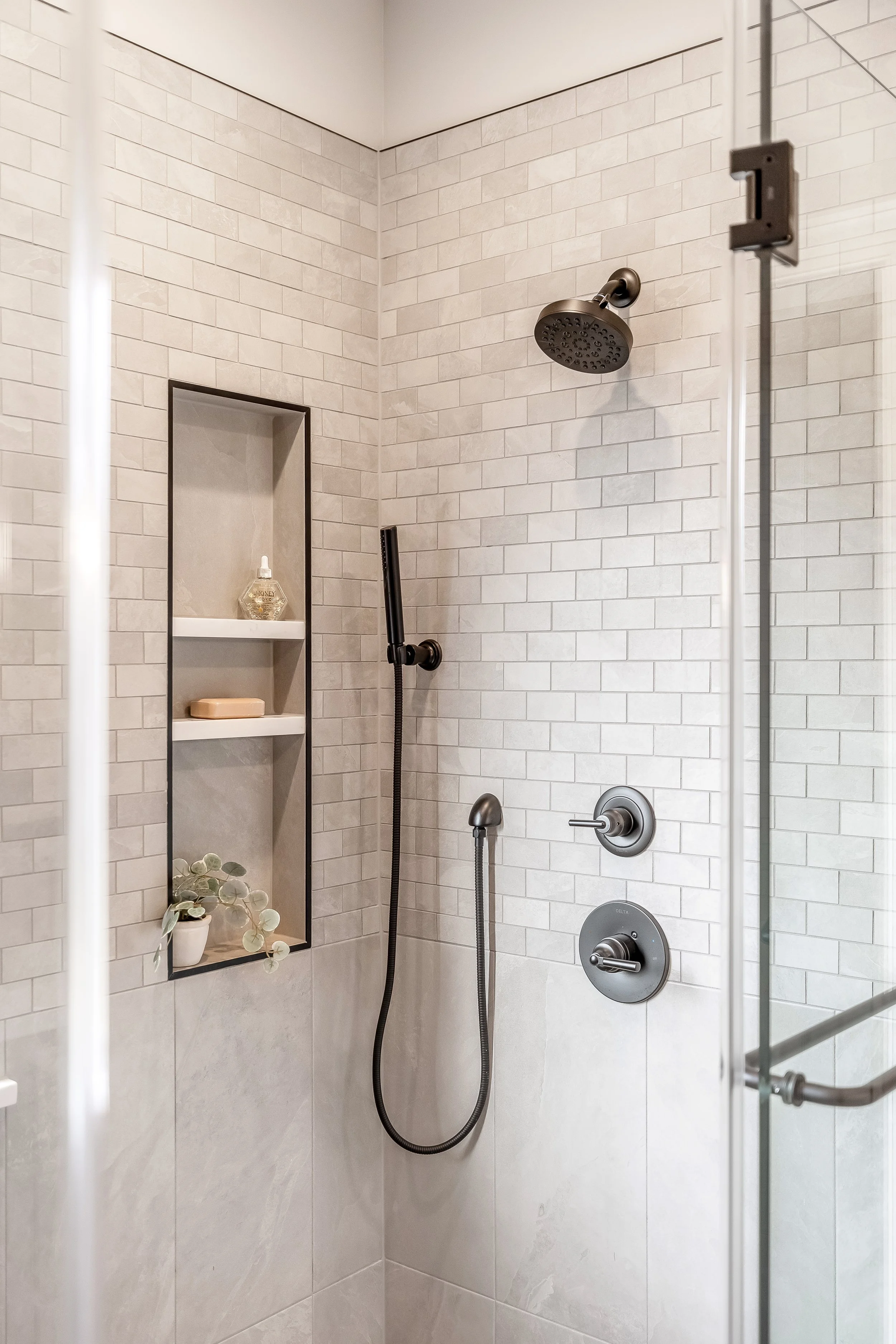
Herringbone: adds movement and direction, works in floors or accents like a shower niche
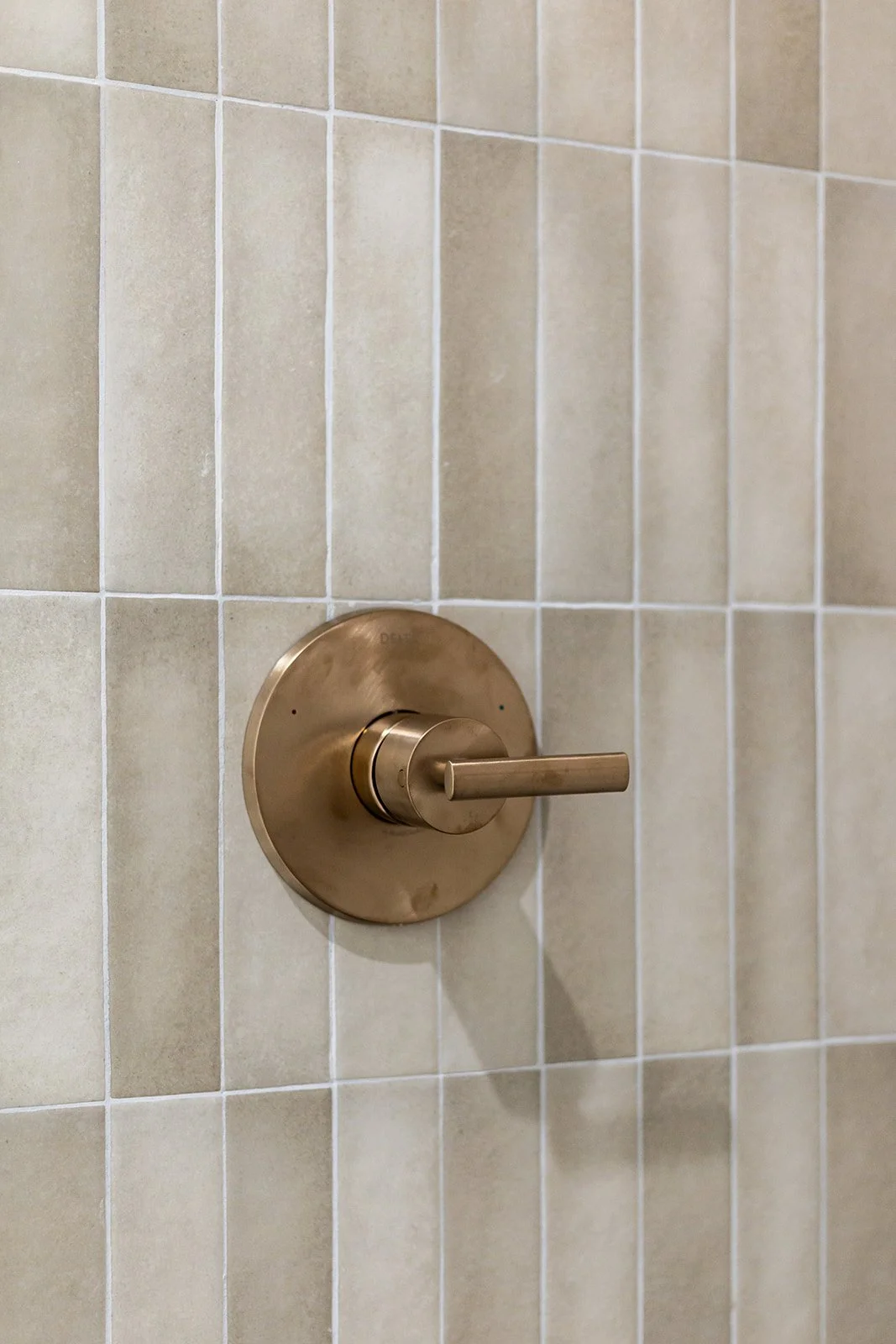
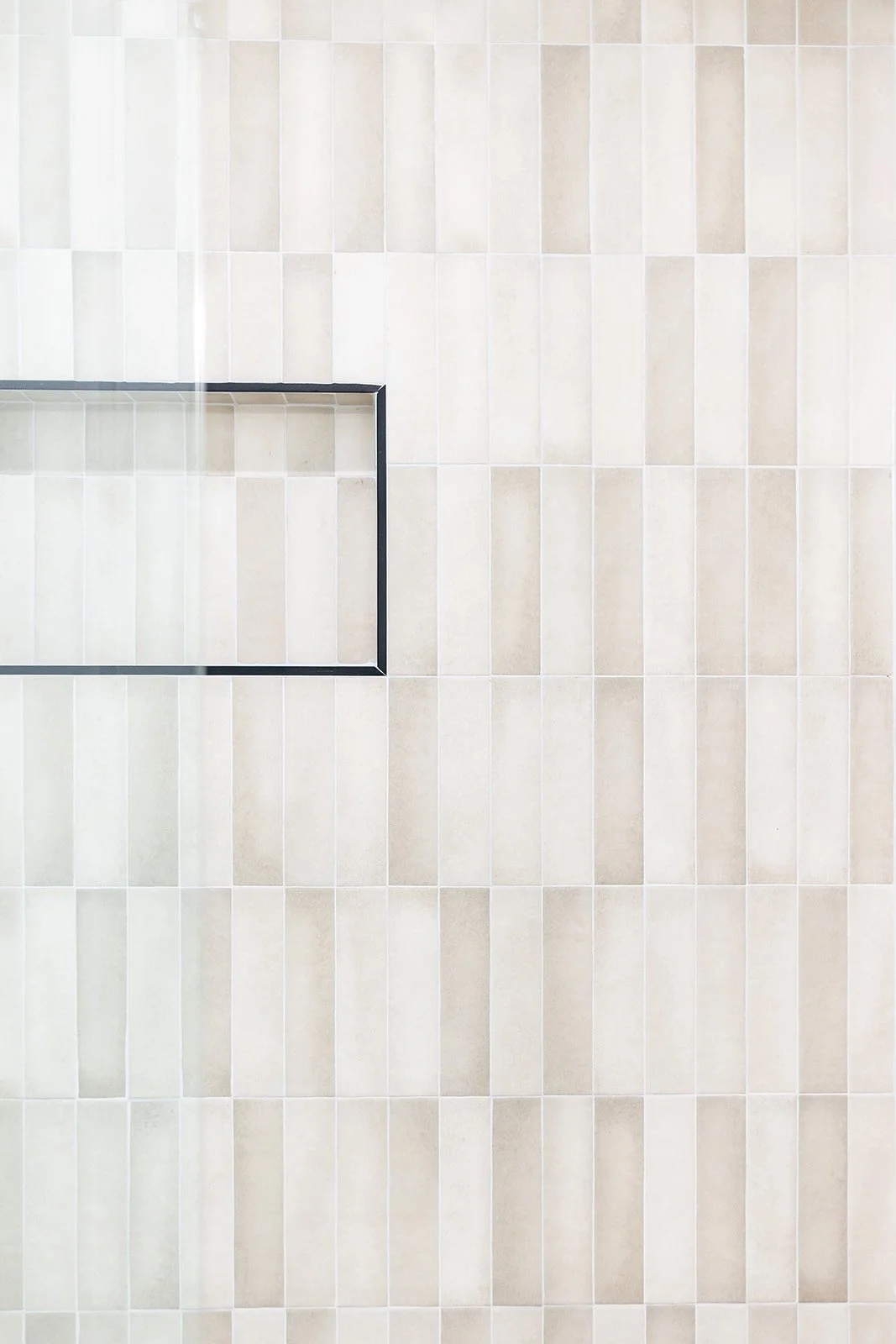
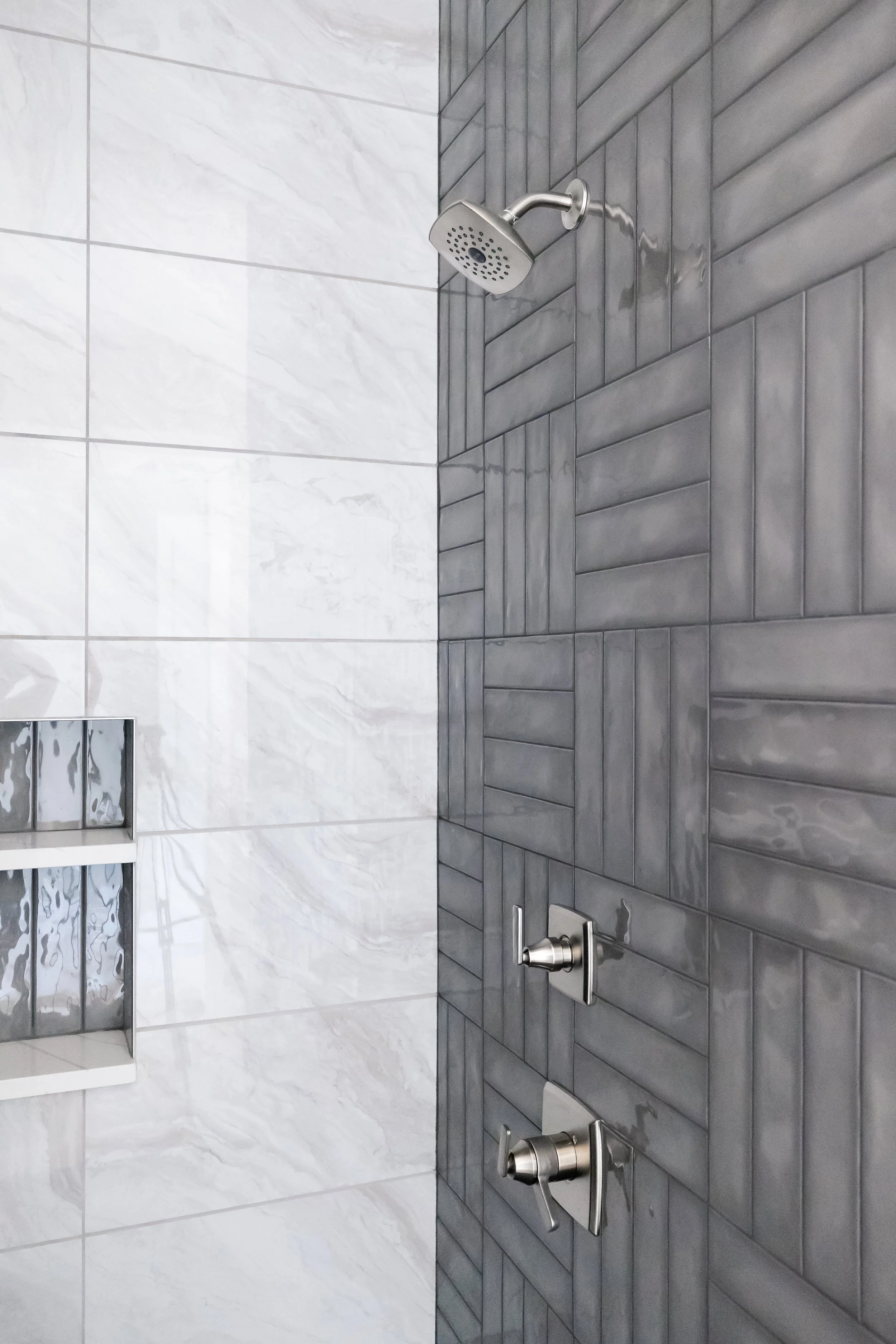
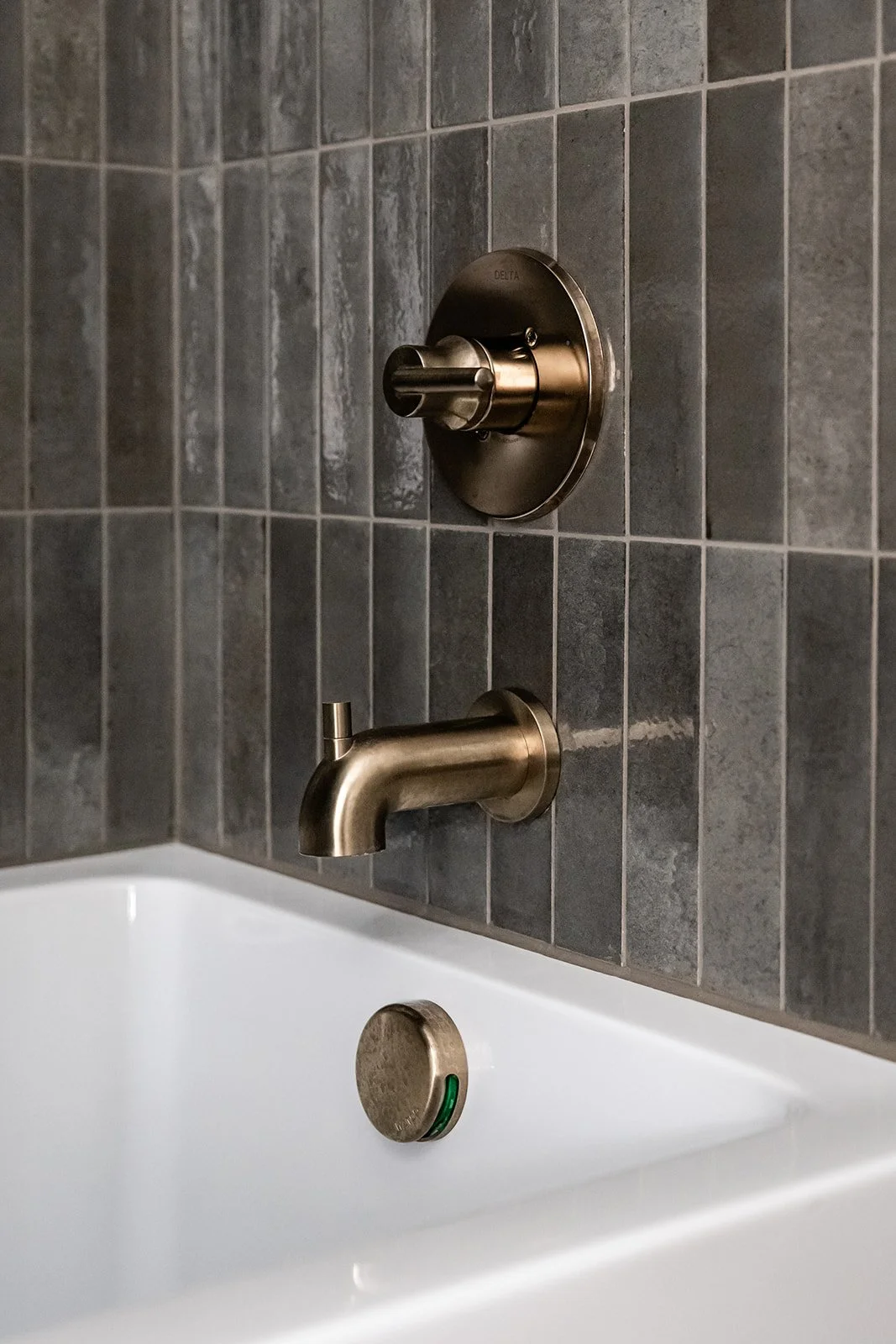
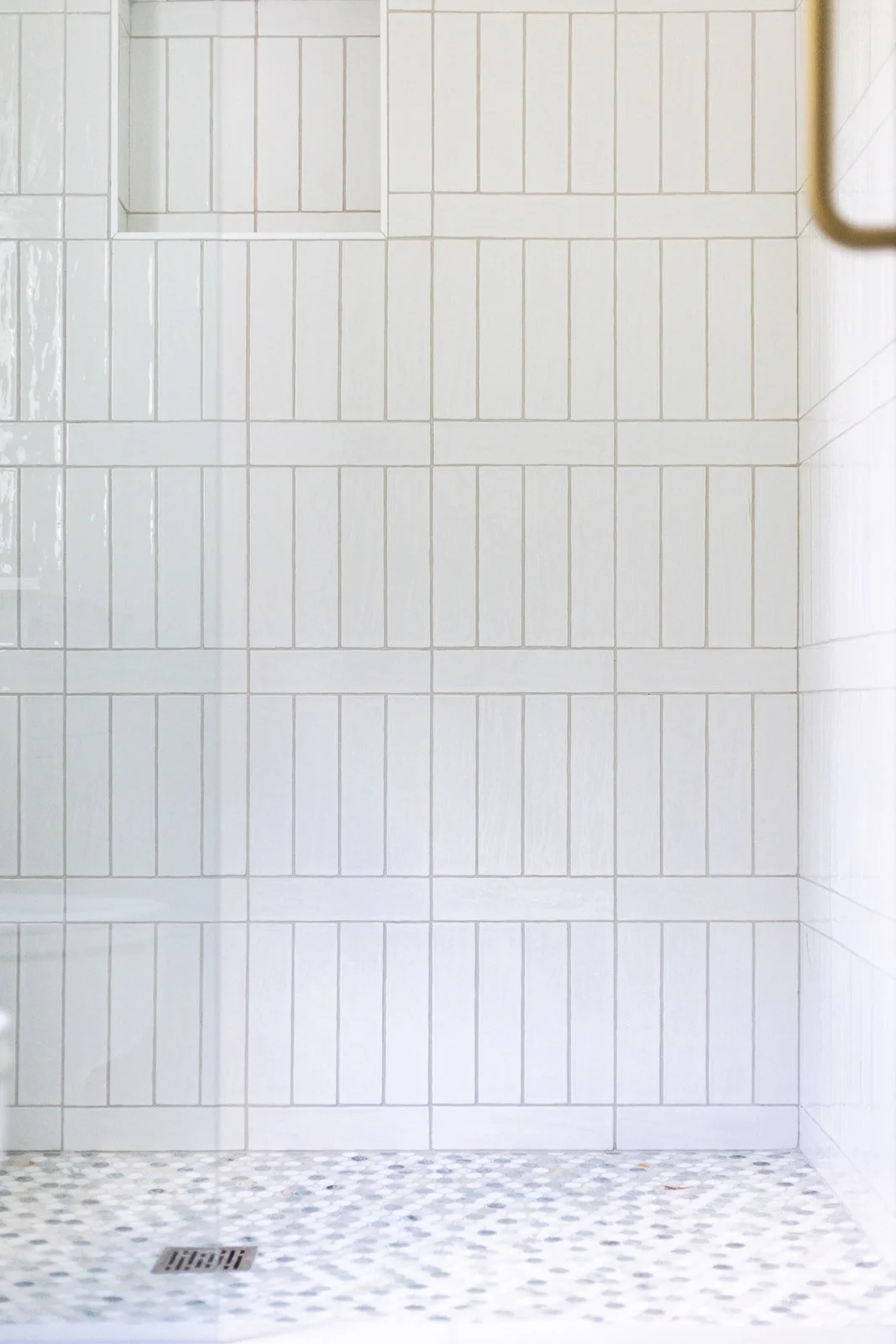
Vertical stack: visually elongates, great for shower walls
In every Studio Lee–designed bathroom, you’ll find a mixture of tile patterns. Vertical stack shower walls, mosaic shower floor, and a herringbone niche? Dream combo!
"When I design a bathroom, I’m considering the tile as well as lay pattern. Sometimes the tile I choose is actually dictated by the lay pattern and look I want to achieve. Lay pattern is a best-kept secret. It’s one of the easiest ways to add visual interest without adding cost or complexity." —Erica Lee
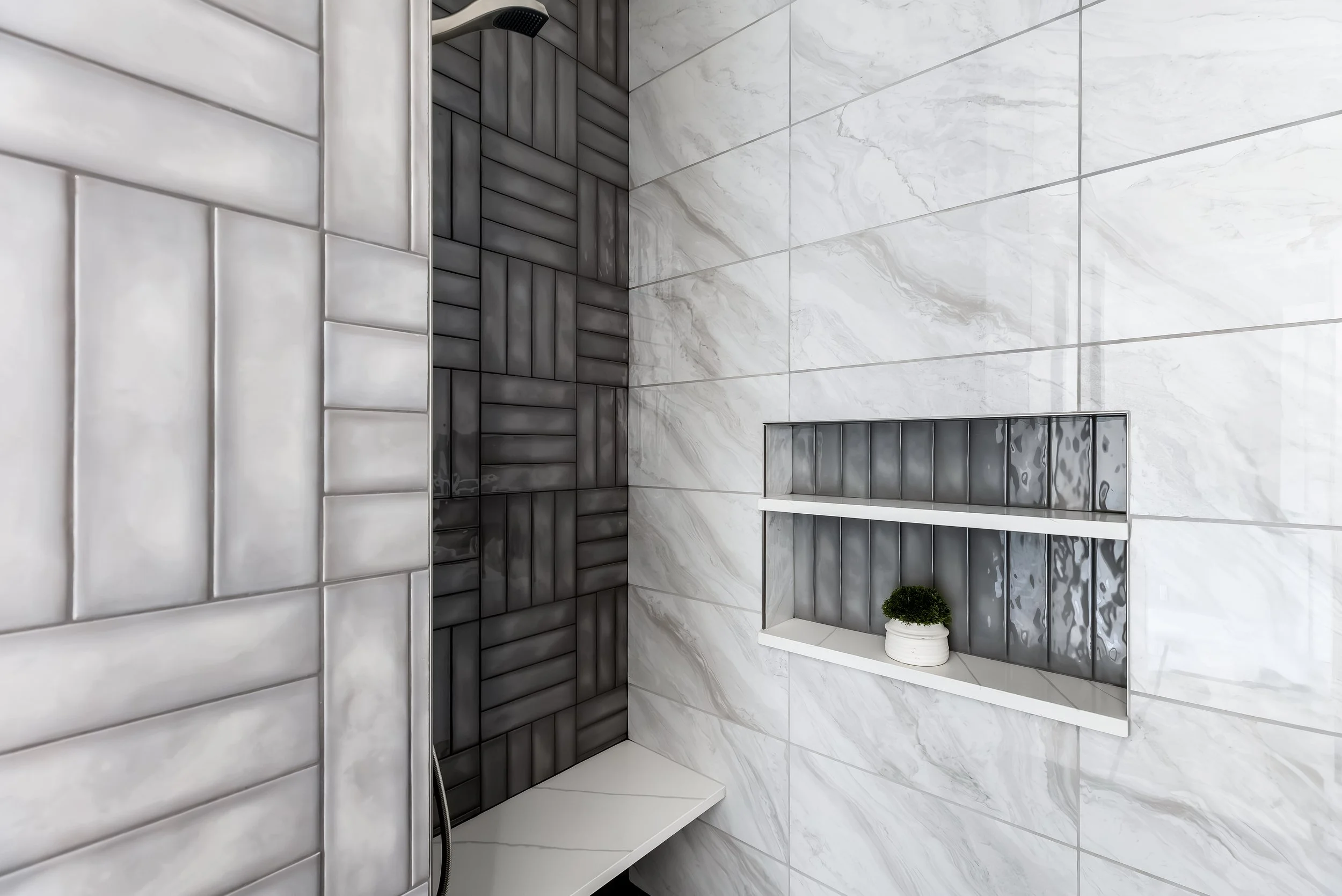
The lay pattern mélange is the real hero of this monochromatic shower.
In the Mix: Combining Tile Shapes and Textures
Want to create that layered, custom bathroom look? Try mixing tiles of different shapes and textures.
If the entire shower is smooth and glossy, you may miss out on creating depth and interest. If it’s all grid mosaic, it could be too busy and leave your eyes feeling like they need a break.
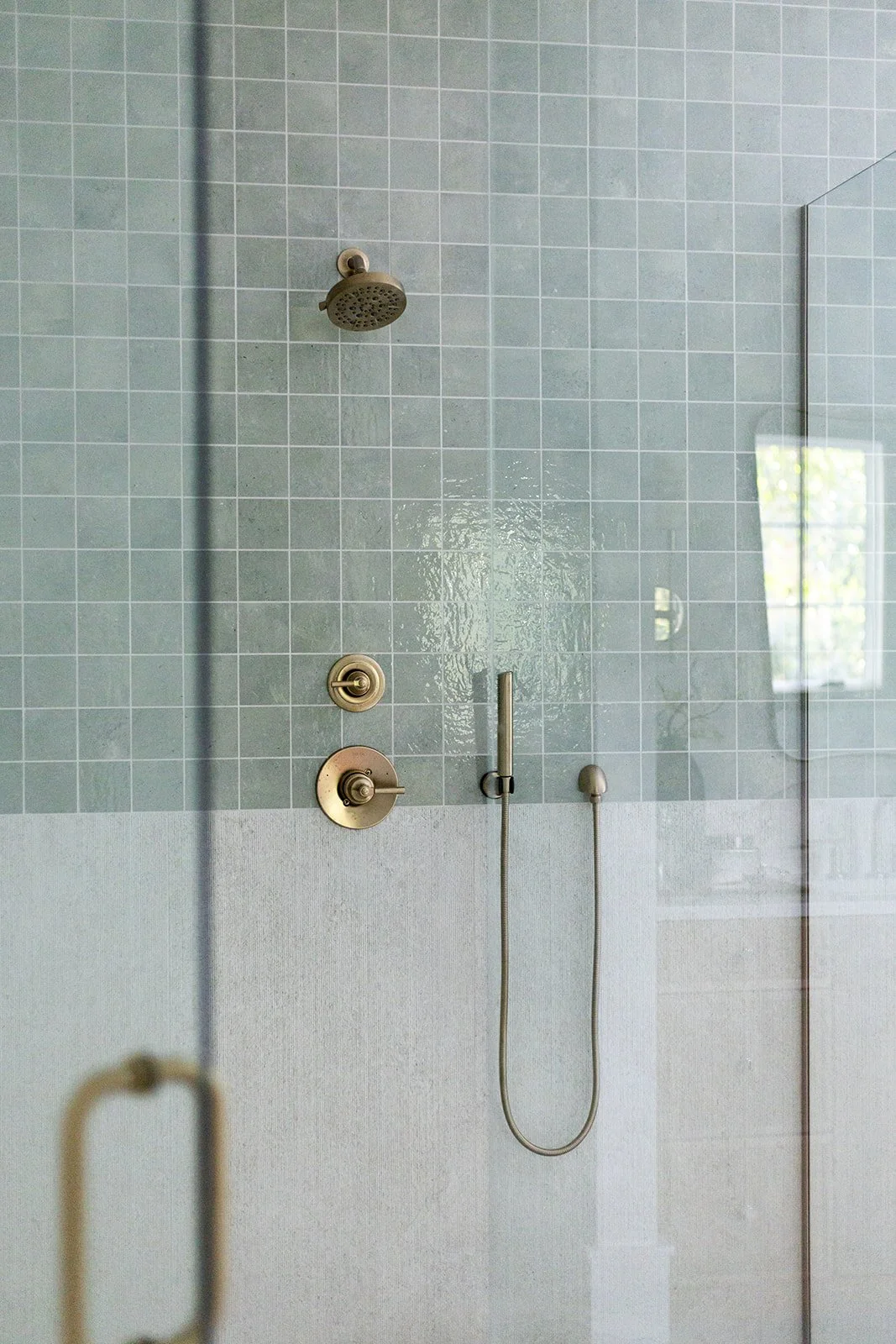
Mixing it up should do the trick. The key is to keep the tone and color consistent while varying the shape, finish, and/or texture. Practically, this looks like:
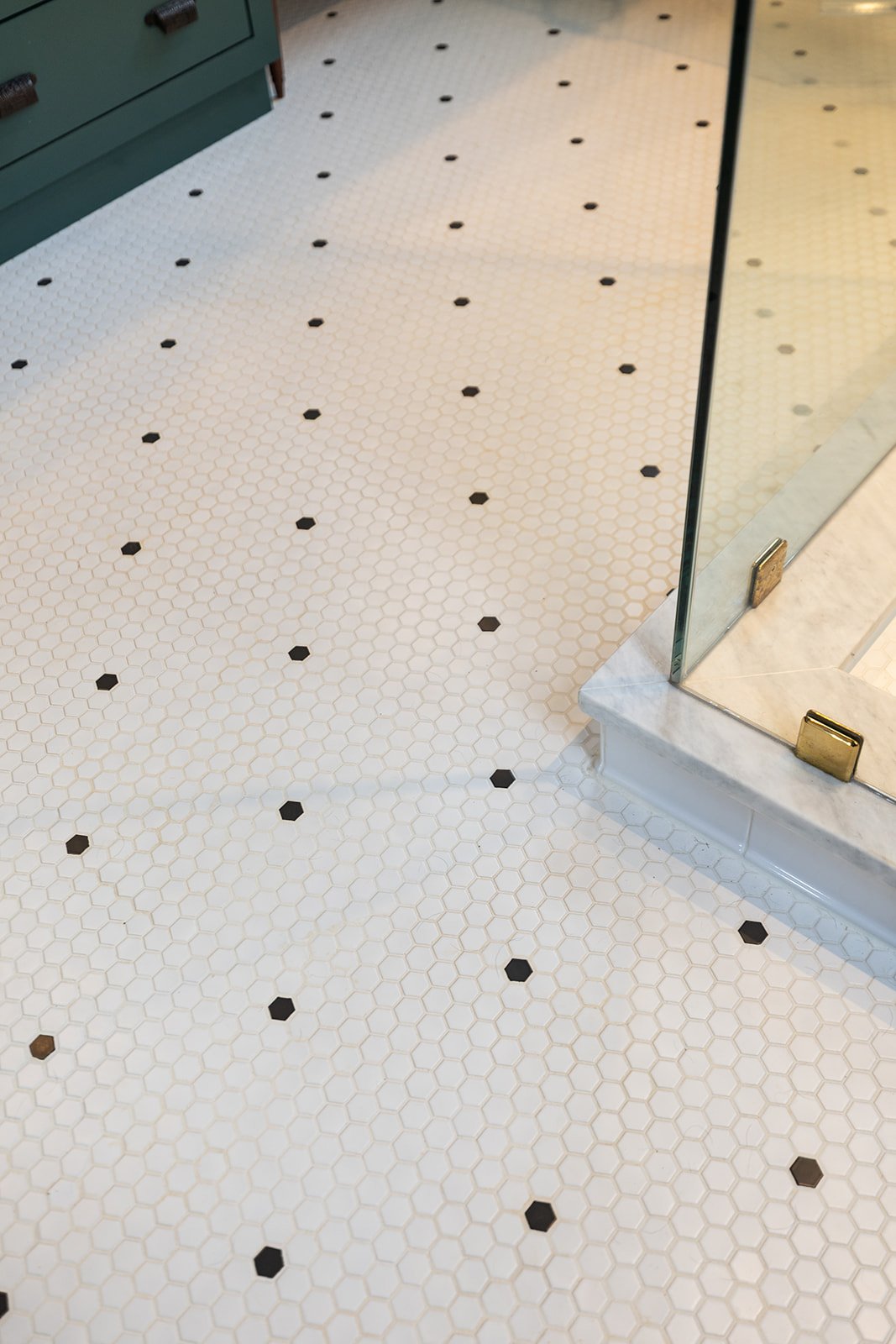
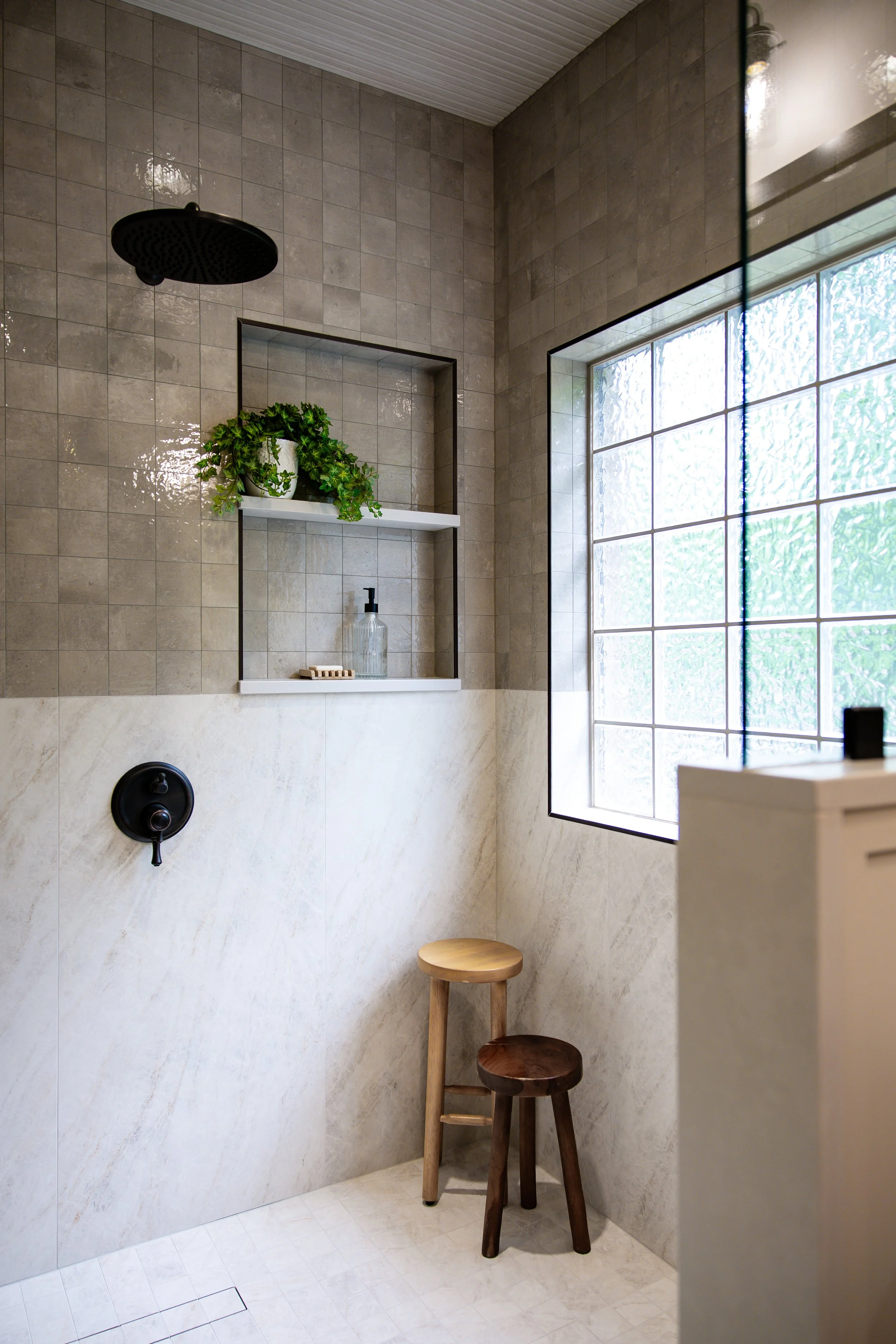
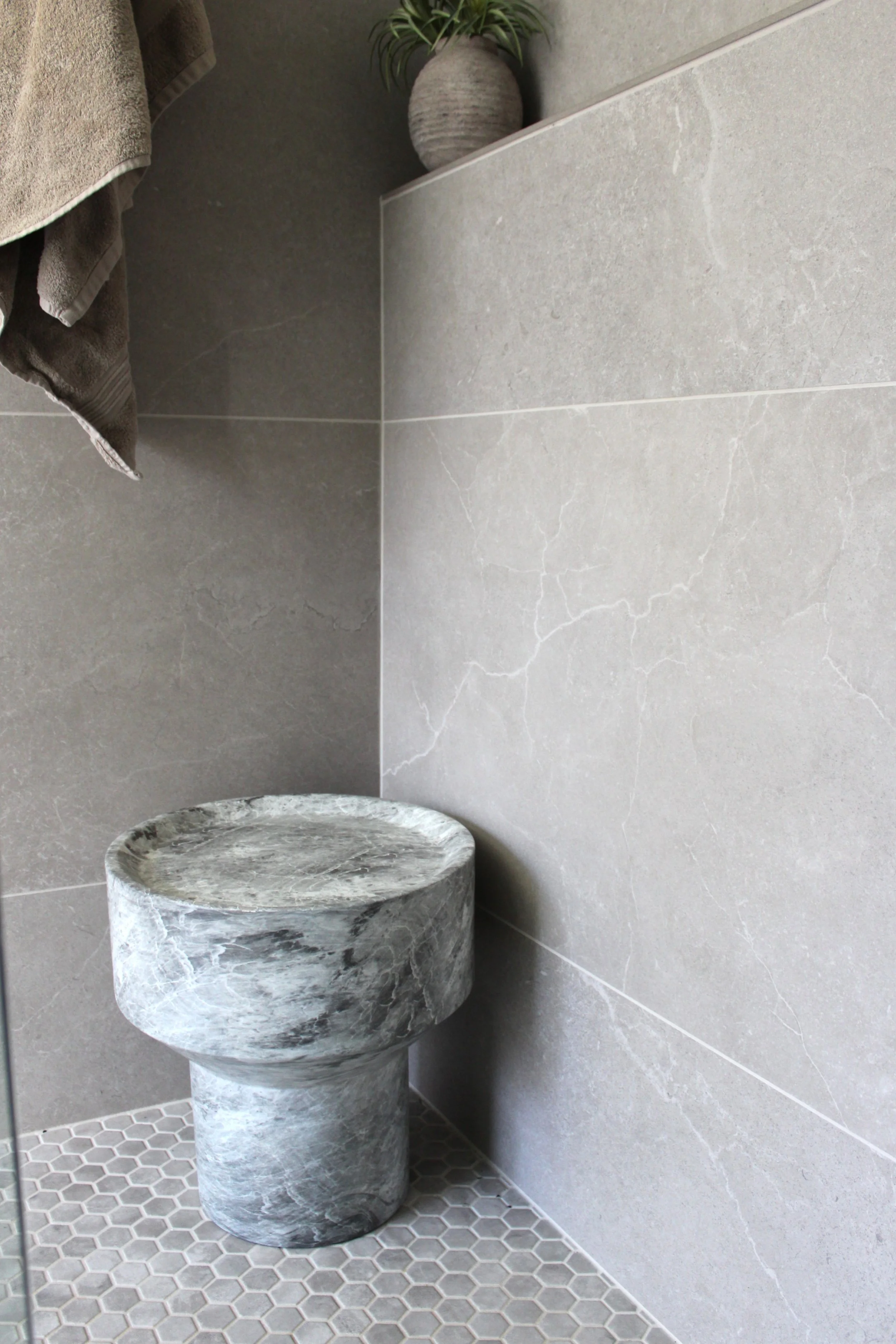
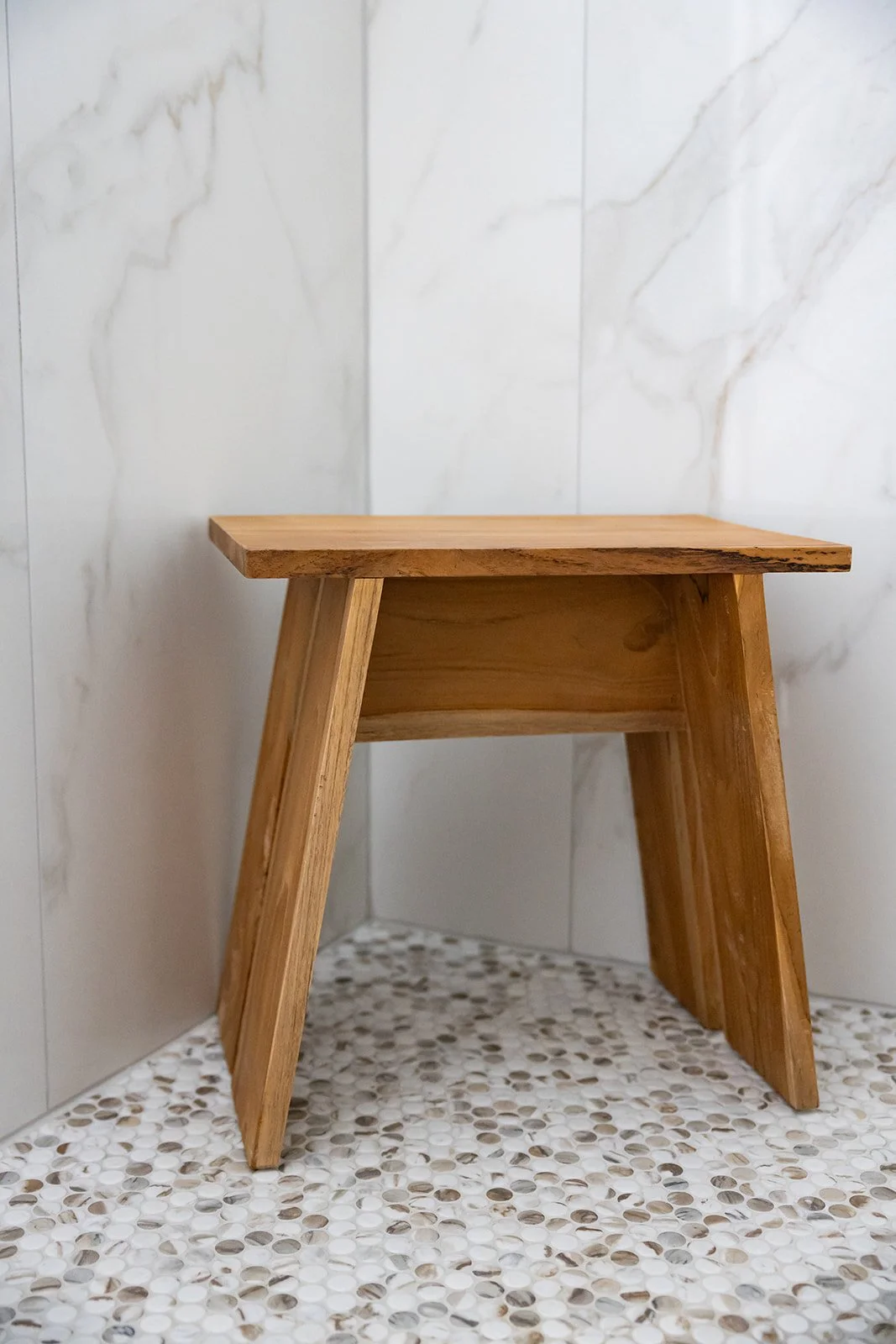
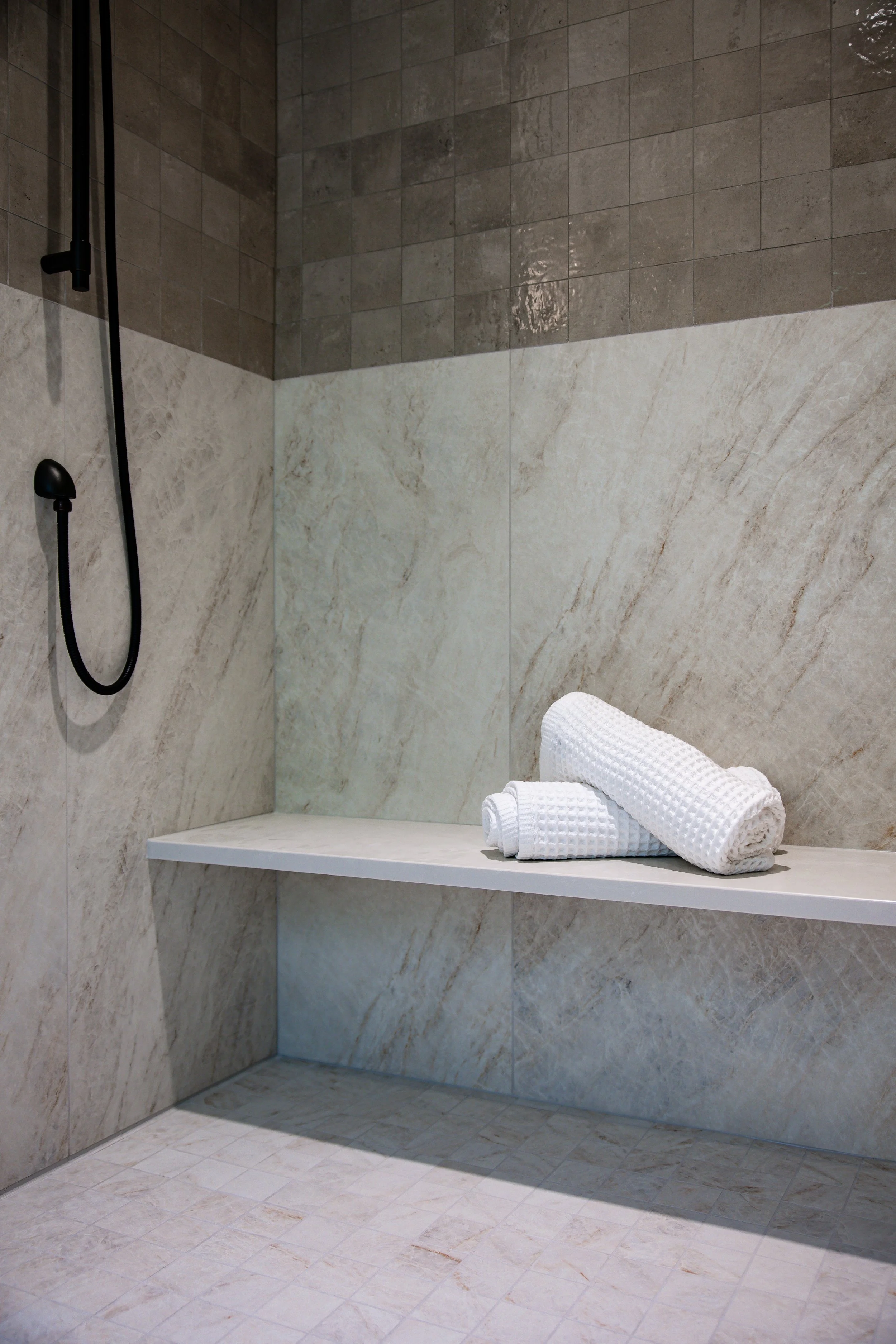
Large-format wall tile with a mosaic floor
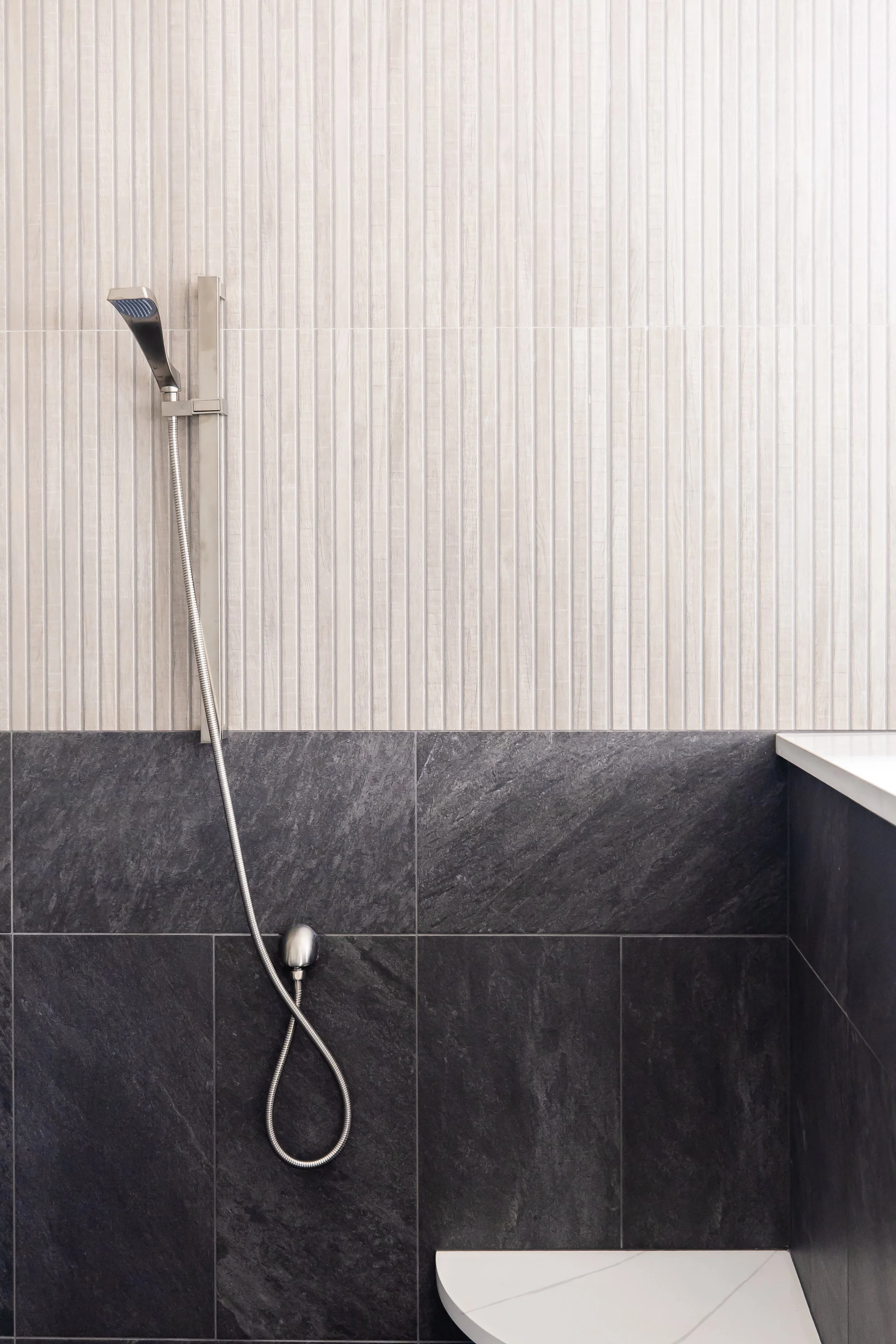
Ribbed or fluted tile paired with a smooth, flat surface
Matte-finish walls with a polished or glossy accent
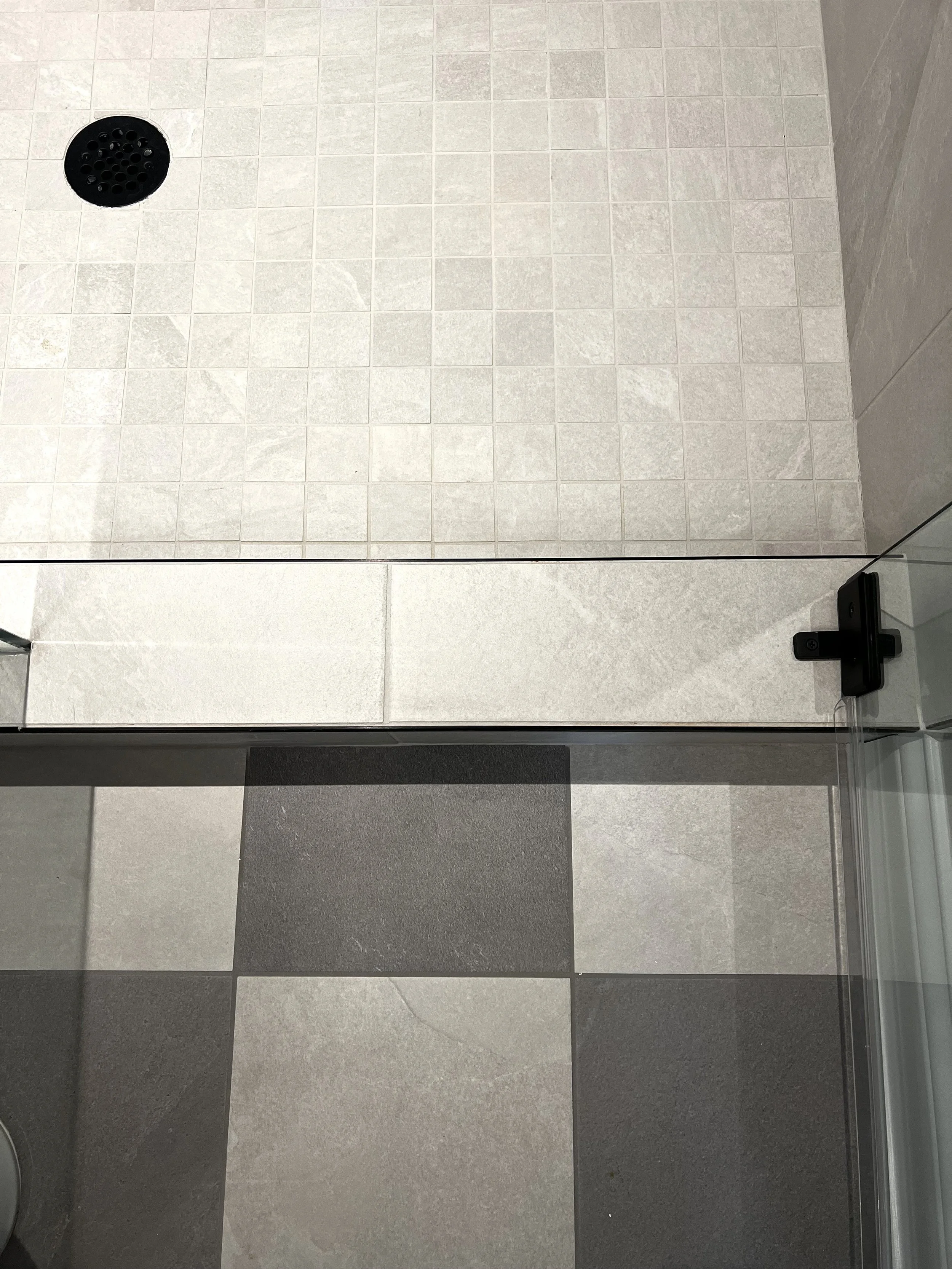
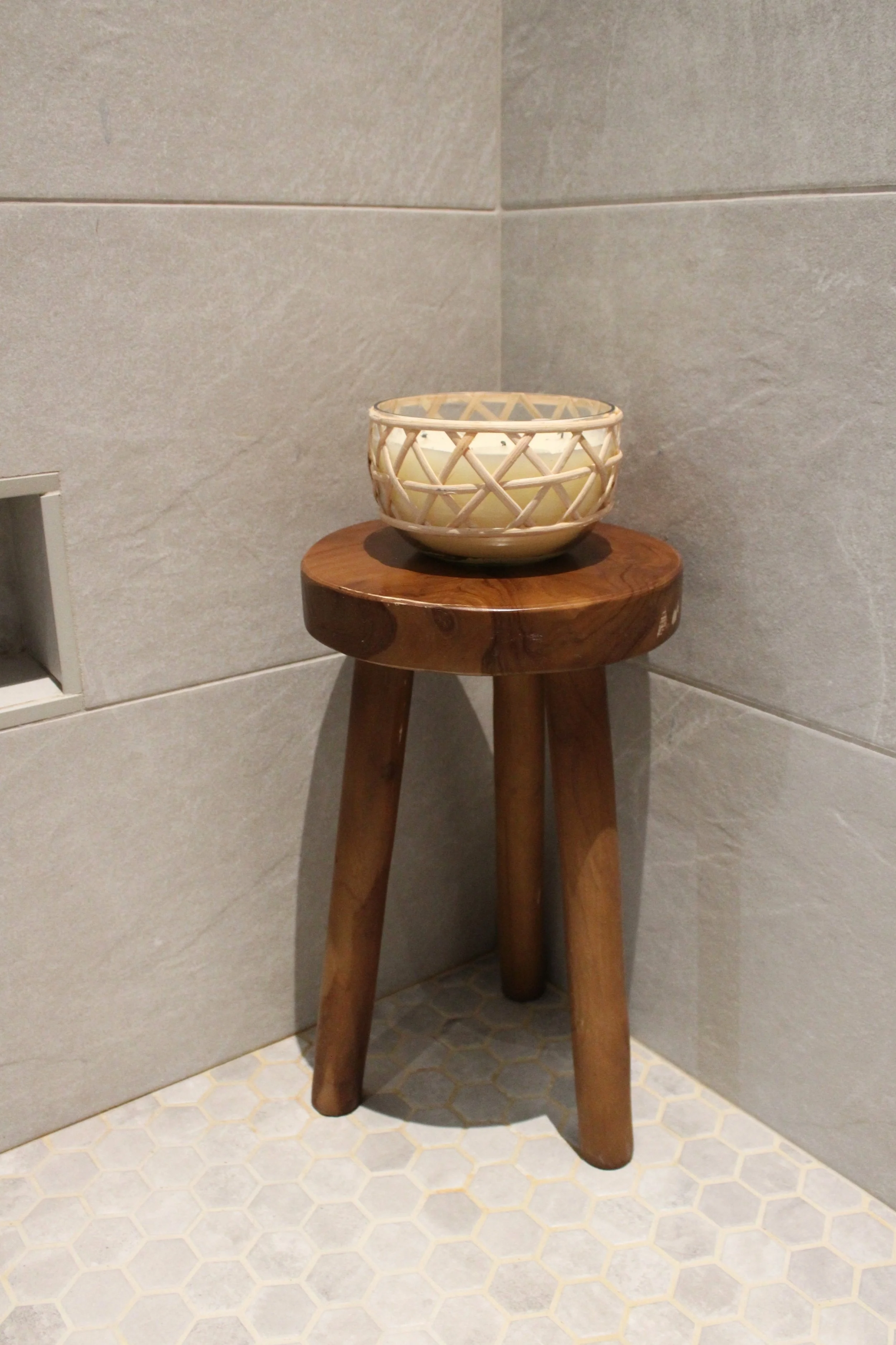
When it’s done right, mixing tile feels collected and intentional, not chaotic. Swipe through the gallery below to see some of our favorite tile-mixing moments.
To Curb or Not to Curb (the Shower)
You may be wondering, “What is a shower curb?” In bathroom design, it’s the raised barrier that separates the shower floor from the rest of the floor. In many homes, this is achieved using a shower pan. But in a curbless shower—you guessed it—there’s no barrier, and the bathroom floor runs straight into the shower floor.
Deciding whether to make the shower curbed or curbless is a functional decision that also makes a significant impact on the design. There’s no clear “winner.” Both styles have their merits (and limitations).
Curbed showers
Are traditional, more common, and easier and less expensive to waterproof
Create a visual and physical boundary between the shower and floor
Can interrupt the flow of the space, especially in smaller bathrooms
Usually a requirement on renovated spaces without dropping the subfloor, which adds cost
Curbless showers
Are modern, sleek, and seamless (the floor appears as one continuous plane)
Require precise sloping and more precise waterproofing
Make the shower feel connected to the overall space
Provide an accessibility benefit (no threshold to step over)
Sunset Drive: Nailing the Curbless Look
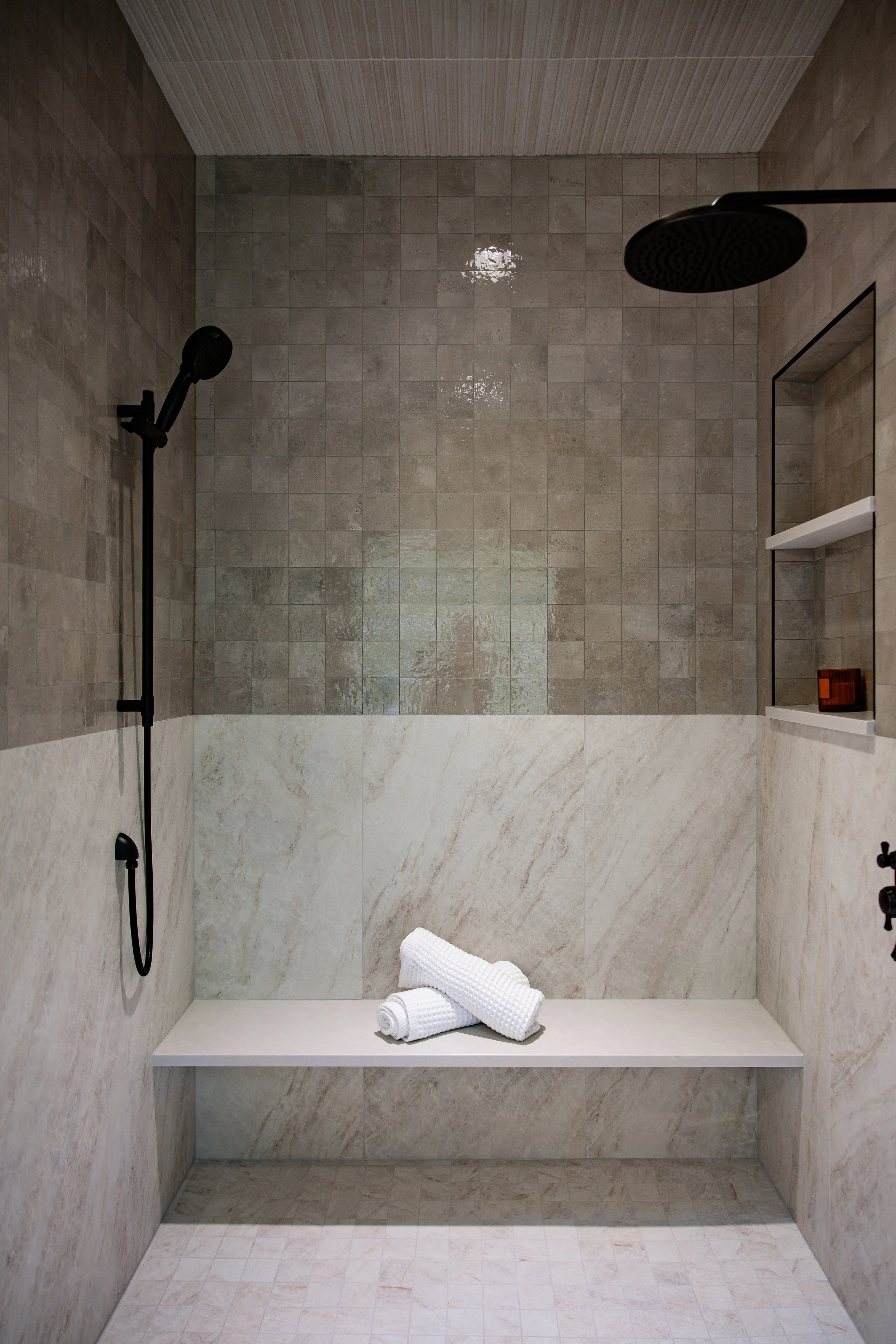
Our Sunset Drive project features a fully curbless primary bath. You can see how the floor flows directly into the shower with no interruption. And speaking of flow, we incorporated a linear shower drain with a mosaic tile to make for easy sloping. The result is a seamless, spa-like experience that feels intentional from every angle.
Sunset Drive was a spec home, but you wouldn’t know it, because details like this curbless shower feel so luxurious they seem custom.
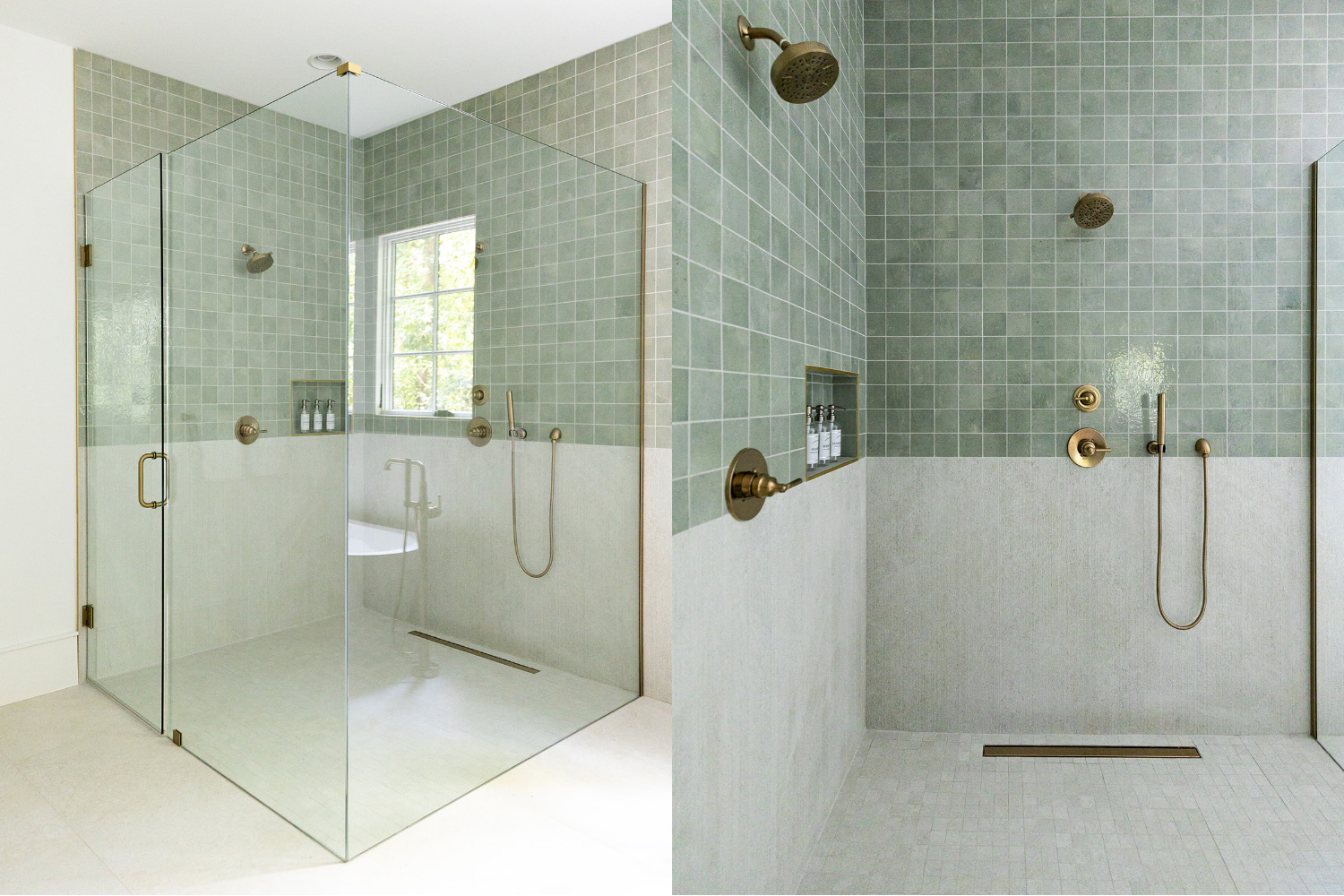
The Sunset Drive primary shower is a curbless, mixed-tile showstopper.
Ditch the Matchy Metals
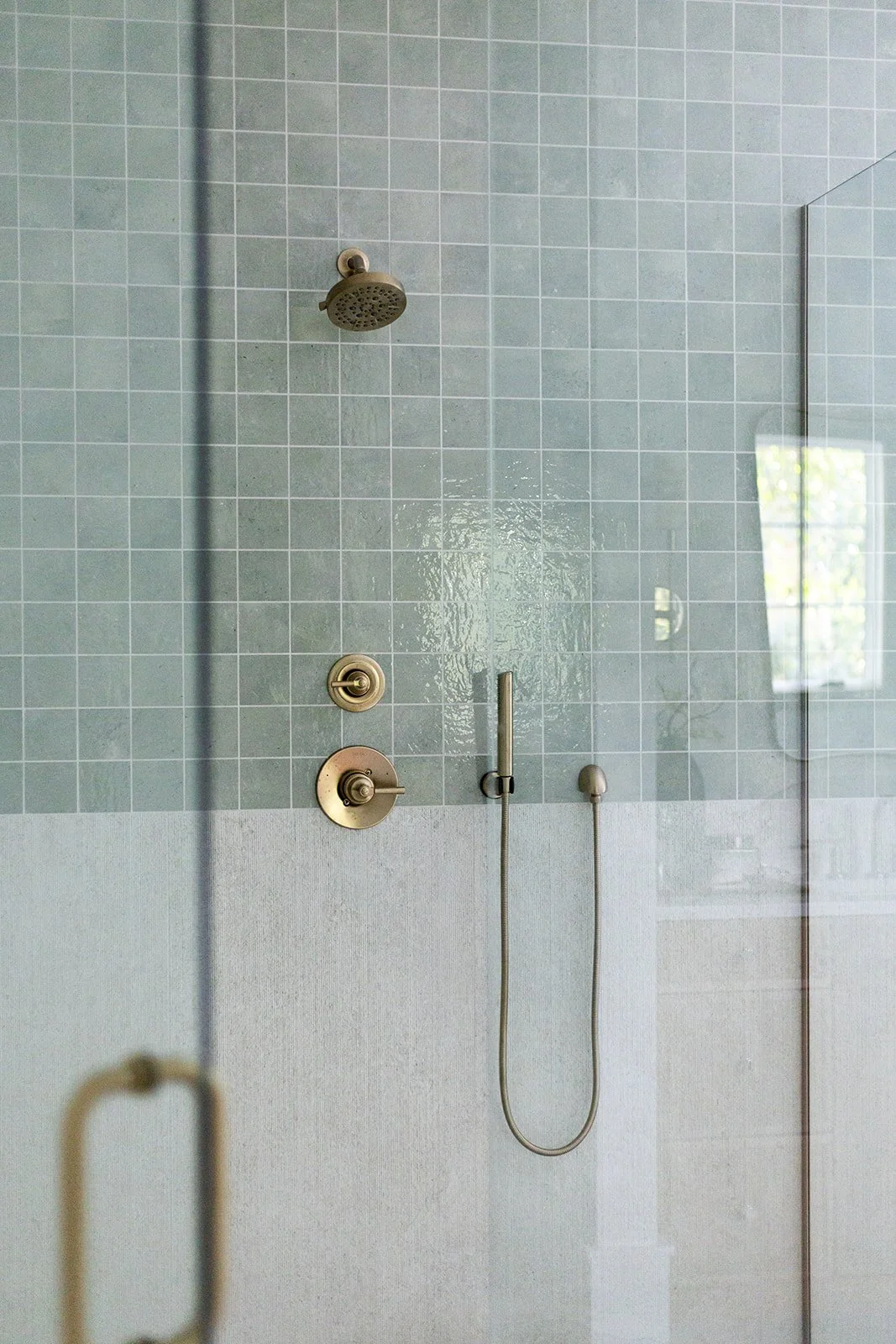
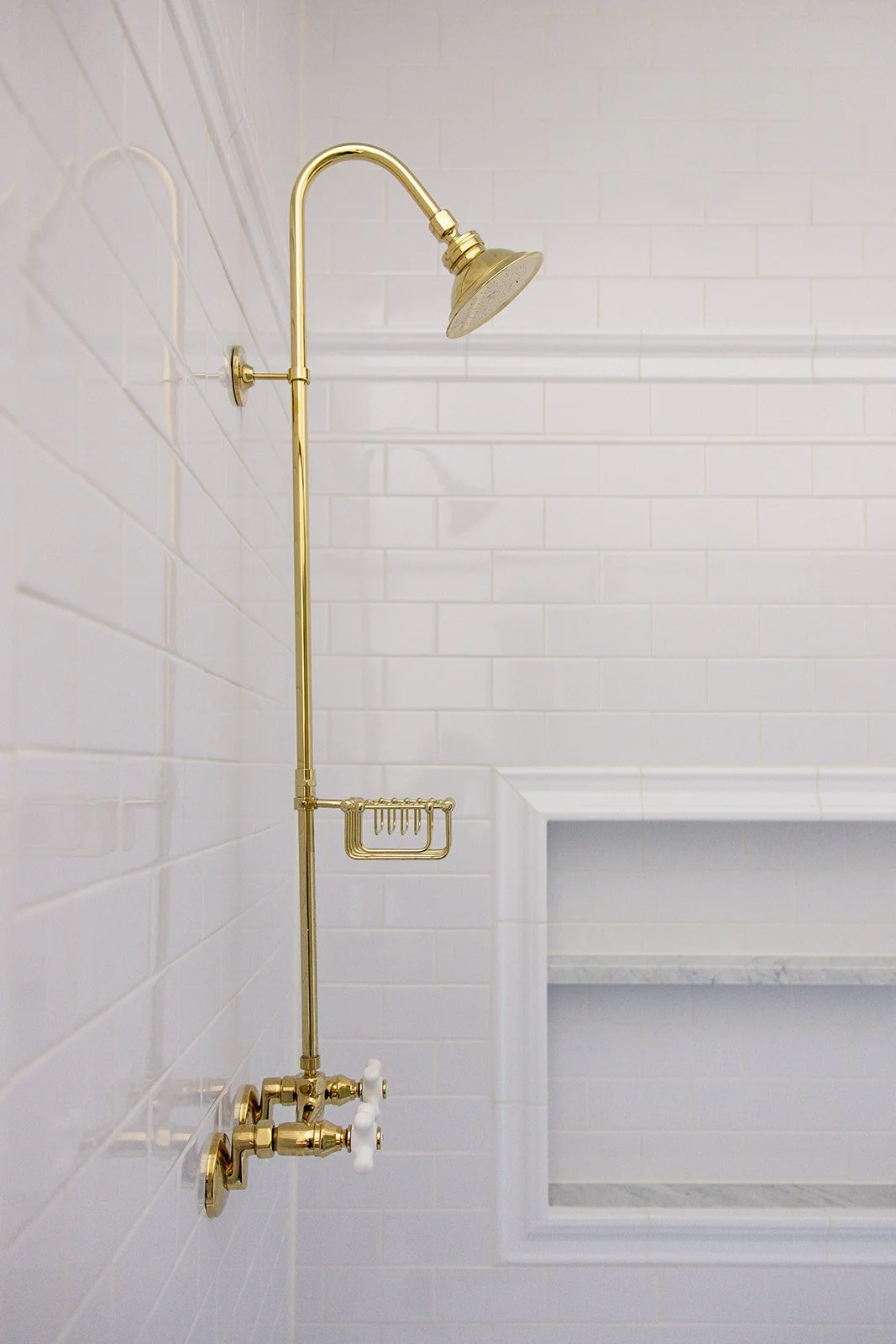
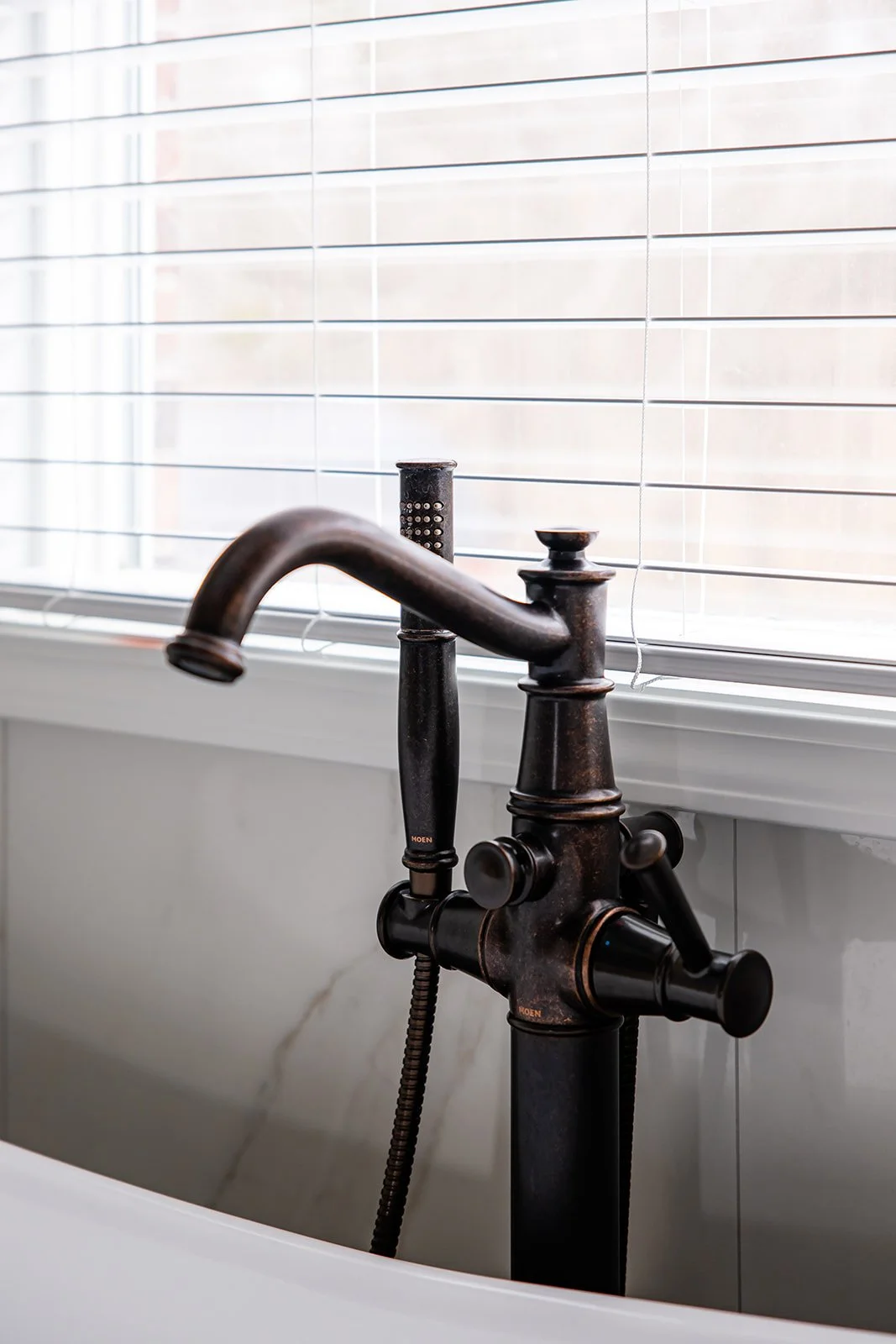
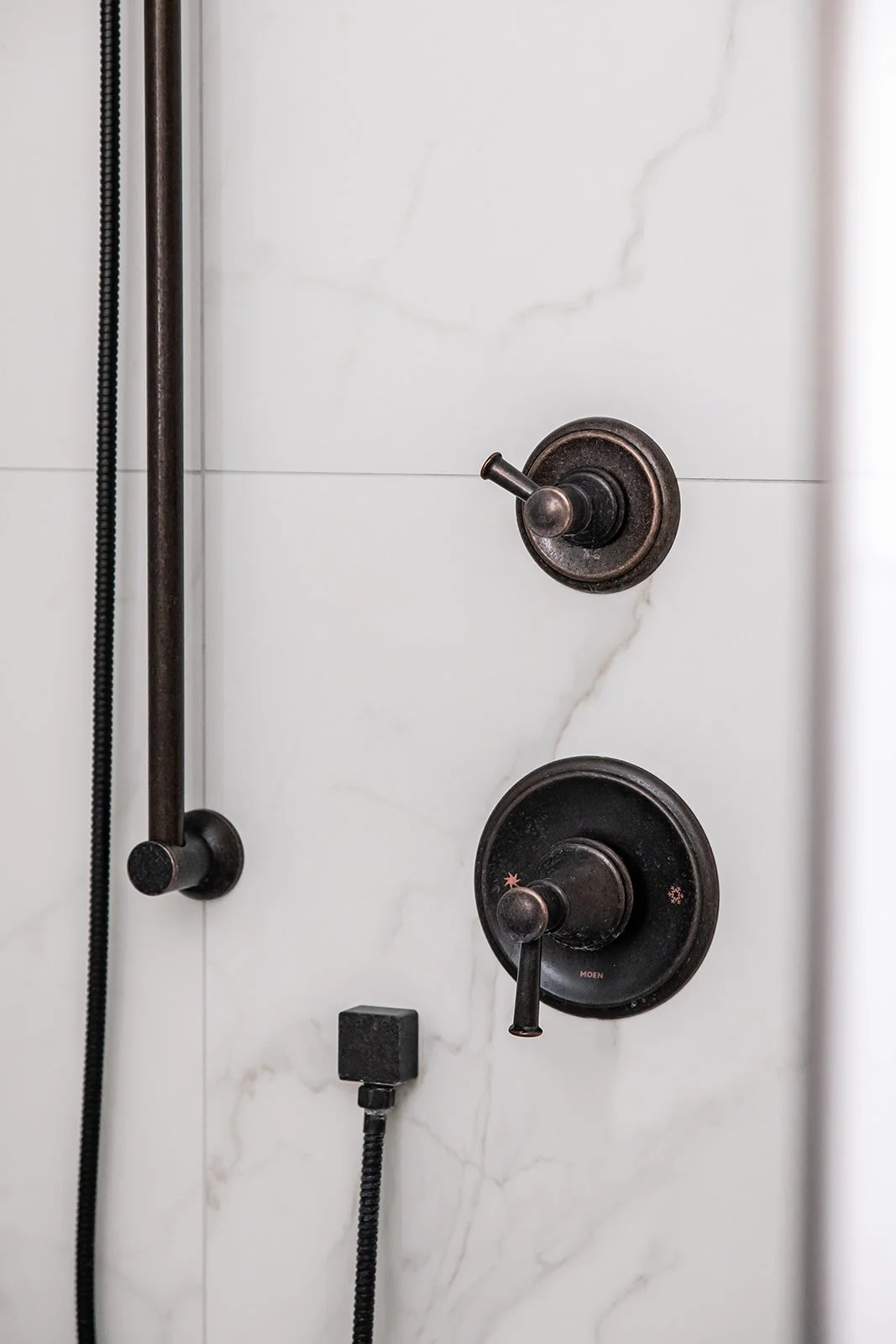
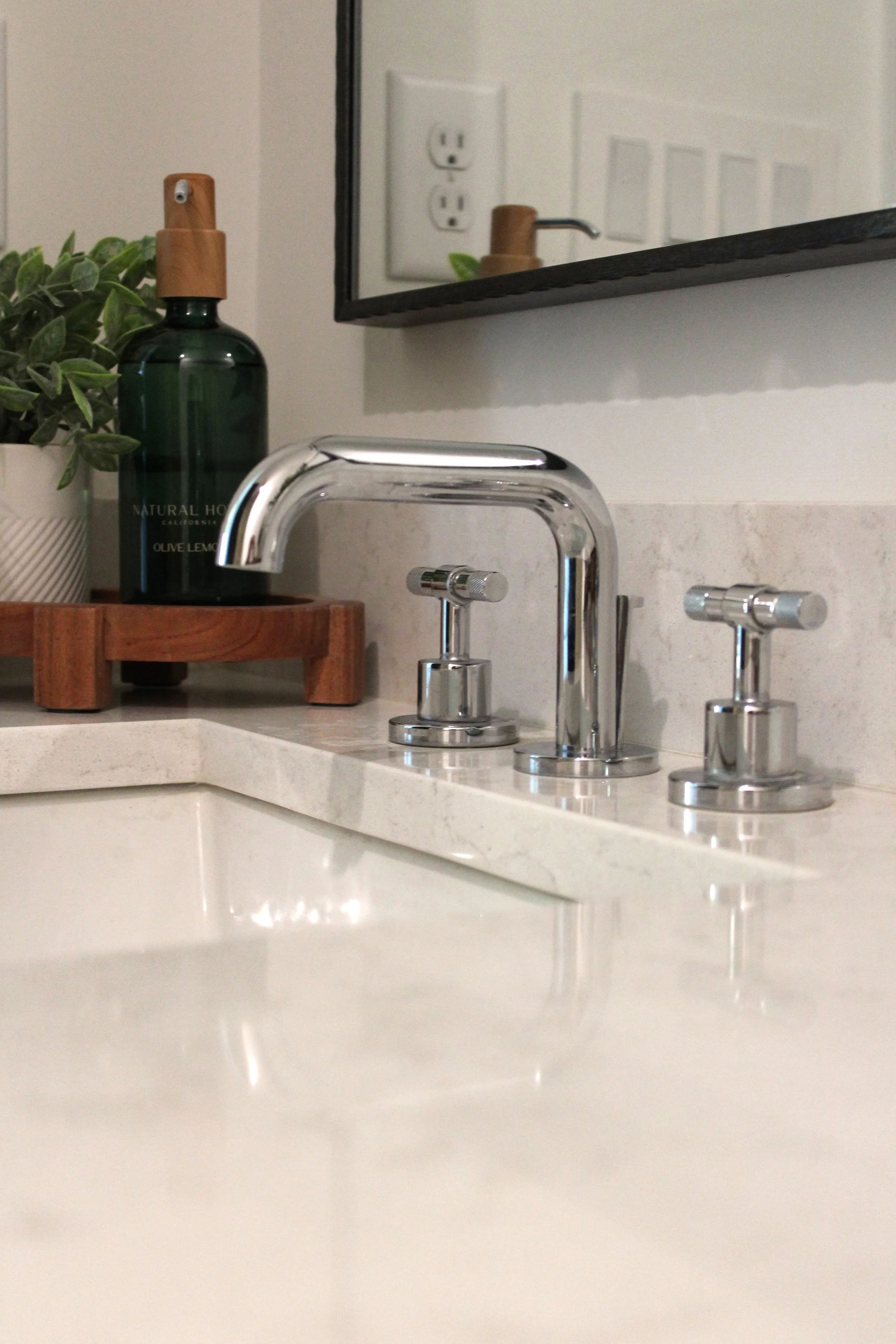
The days of matching every metal finish in a bathroom are over, and that’s a good thing. Mixing metals adds depth, warmth, and a collected quality that feels more personal and less “showroom.”
"Rules for mixing metals well: Choose one dominant finish and one accent finish. Don’t introduce more than two finish tones. Make sure the finish varies intentionally, like matte versus polished, warm versus cool. Then repeat each finish at least twice so the mix feels deliberate.” —Erica Lee
Of course, some tried-and-true combinations just work:
Polished nickel + unlacquered brass = classic and timeless
Matte black + champagne bronze = warm and organic modern
Oil-rubbed bronze + gold = rich, layered, and traditional
It comes down to the vibe you’re going for. And ultimately, the home’s universal metal direction should be decided at the onset of the project. (That’s where it helps to hire a good designer who knows what they’re doing.)
Bathroom Design Magic Lies in the Details
From coordinating metals and curbless showers to tile textures and lay patterns, the magic of bathroom design is found in the details. Each detail is an intentional decision, and every decision connects to the next.
That’s why bathrooms benefit so much from thoughtful design guidance. So whether you are renovating, refreshing, or building from scratch, I can help you design a bathroom that gets every detail right.
Got bathroom design decision fatigue?
Schedule a design consultation and let’s tackle your project together.